

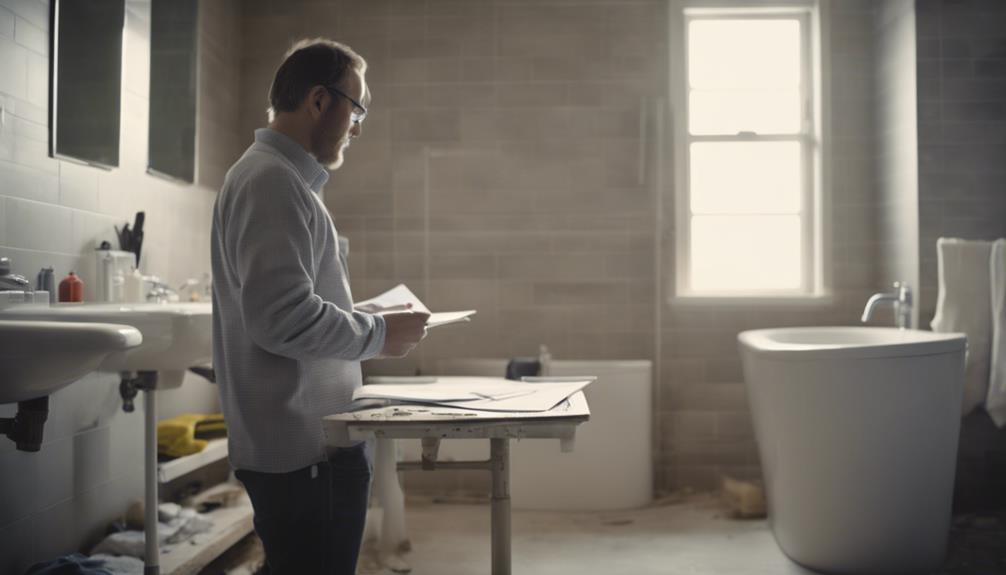
For you as a bathroom remodeler, compliance means adhering to a variety of local building codes, environmental regulations, and ADA accessibility requirements to ensure the safety, functionality, and sustainability of your projects. You'll need to install water-efficient fixtures like those labeled by WaterSense, ensure all electrical installations are GFCI protected, and make sure the space meets accessibility standards such as door widths and grab bar installations. Additionally, using low-VOC materials and maintaining safety protocols during construction are essential. By staying compliant, you not only safeguard your client's interests but also enhance your reputation as a reliable professional. There's much more to uncover about each of these requirements.
Understanding Building Codes
When remodeling your bathroom, it's crucial to understand and adhere to local building codes. These regulations are designed to ensure safety, accessibility, and structural integrity. You'll need to check with your local building department to see what specific codes apply to your area. This step isn't just a formality—it's a necessity that can impact everything from the layout to the materials you choose.
For instance, there are often strict requirements about electrical fixtures in bathrooms due to the presence of water. You'll need to ensure all outlets are GFCI (Ground Fault Circuit Interrupter) protected to prevent electrical shocks. Lighting fixtures must also be suitable for wet environments. Don't overlook the ventilation requirements either; proper air circulation is essential to prevent mold growth and maintain air quality.
Additionally, the placement and sizing of windows and doors must meet egress requirements, providing a safe exit in case of emergencies. Structural changes, like moving walls or changing the floor plan, often require a permit. Skipping this step can lead to costly fines and complications down the line.
Water Use and Efficiency Standards
In addition to understanding building codes, you must consider water use and efficiency standards in your bathroom remodel. These standards are crucial not only for conserving water but also for reducing your long-term water bills.
First, you'll need to familiarize yourself with the Environmental Protection Agency's (EPA) WaterSense standards. Products that meet these criteria use at least 20% less water than typical models. When selecting toilets, faucets, and showerheads, look for the WaterSense label to ensure they meet efficiency requirements.
You should also be aware of state and local regulations that may impact water usage in bathrooms. Some areas have stricter standards than the federal level, especially in regions prone to drought. For instance, California has its own standards that include specific flow rates for plumbing fixtures.
Furthermore, consider installing dual-flush toilets and low-flow showerheads to enhance water efficiency. These fixtures allow you to adjust the water usage based on your needs, which can lead to significant savings.
ADA Accessibility Requirements
Understanding ADA accessibility requirements is essential for any bathroom remodel. As a remodeler, you need to ensure that your designs and constructions meet these standards to accommodate individuals with disabilities. This isn't just about compliance; it's about making spaces usable for everyone.
Firstly, you've got to consider the doorway widths. They should be at least 32 inches when the door is open at 90 degrees, allowing wheelchair access. Inside the bathroom, ensure there's enough maneuvering space. A minimum of 30 by 48 inches of clear floor space should be provided in front of each plumbing fixture, including the sink and toilet.
Speaking of toilets, positioning is key. The centerline of the toilet must be 16 to 18 inches from the side wall or partition. Grab bars are non-negotiable. They must be installed near the toilet and within the bathtub and shower areas to provide support and stability.
For sinks, ensure they're no higher than 34 inches from the floor and have a knee clearance of 27 inches high, 30 inches wide, and 19 inches deep. Faucets should be operable with one hand and shouldn't require tight grasping or twisting.
Environmental Impact Regulations
As a bathroom remodeler, you must also consider the environmental impact of your projects. This isn't just about following the law; it's about contributing to a sustainable future. Most regions have specific regulations that govern the disposal of materials and the use of water and energy-efficient fixtures.
You're likely familiar with regulations requiring the reduction of volatile organic compounds (VOCs) in paints and solvents. These measures are designed to cut down on indoor air pollution and its negative effects on health. Similarly, you should be using materials that are sustainably sourced, such as certified wood, or recycled materials that help reduce the demand on natural resources.
Water usage is another critical area. Installing low-flow toilets, showerheads, and faucets isn't just a trend; it's a requirement in many places to help conserve water.
Moreover, consider the energy efficiency of the lighting fixtures you install. Opting for LED lights can drastically reduce the electricity use and cost for homeowners.
Lastly, proper waste management practices are crucial. Make sure you're recycling old fixtures and materials whenever possible. Adhering to these regulations not only helps protect the environment but also builds your reputation as a responsible and forward-thinking professional.
Safety Protocols in Construction
Ensuring your job site adheres to rigorous safety protocols is crucial to preventing accidents and injuries. As a bathroom remodeler, you've got to prioritize not only the aesthetics and functionality of your designs but also the safety of everyone involved. Implementing strong safety measures isn't just about compliance; it's about protecting lives.
First, always provide proper training for your team. Everyone should know how to handle tools safely and recognize potential hazards. Regular safety drills can keep preparedness top-of-mind.
You'll also need to equip your crew with the right personal protective equipment (PPE). This includes gloves, goggles, helmets, and any other gear that shields against specific risks related to bathroom remodeling.
Maintain a tidy workspace. Slips and trips are common but avoidable. Make sure all tools and materials are stored neatly when not in use. Also, ensure that all electrical installations are performed by a qualified electrician to prevent shocks or fires.
Permit and Inspection Processes
After addressing safety protocols, the next step in your bathroom remodeling project is navigating the permit and inspection processes. You'll find that understanding these requirements is essential to ensure your remodel meets local building codes and regulations.
First off, you'll need to determine whether your project requires a permit. Small updates like painting or replacing fixtures often don't need one, but larger changes like altering plumbing or electrical systems usually do. You can check with your local building authority or hire a professional to handle this for you.
Once you've secured your permit, the real challenge begins. You're required to schedule inspections at various stages of your remodel. Typically, an inspector will need to check the work after any major system alterations and again upon completion. These inspections are crucial; they ensure everything is up to code and safely installed.
Don't overlook the importance of these steps. Failing to comply can lead to hefty fines or even force you to redo parts of your project. So, stay ahead by keeping detailed records of all inspections and approved documents. It'll save you a lot of headaches and ensure your newly remodeled bathroom is both beautiful and compliant.
Frequently Asked Questions
How Long Does a Typical Bathroom Remodeling Project Take?
A typical bathroom remodeling project usually takes about 4 to 6 weeks, but it can vary based on the project's complexity and the materials' availability. You'll need to plan accordingly to accommodate any delays.
What Are Common Unexpected Costs in Bathroom Remodeling?
You might face unexpected costs from plumbing issues, water damage, or mold. Material price hikes and code compliance upgrades can also inflate your budget, catching you off guard during the remodeling process.
Can I Use Reclaimed Materials in My Bathroom Remodel?
You can use reclaimed materials in your bathroom remodel to add unique charm and reduce waste. However, ensure they're safe, durable, and appropriate for wet conditions to avoid future issues.
How Does Bathroom Remodeling Affect Home Value?
When you remodel your bathroom, it generally boosts your home's value by updating aesthetics and functionality. Potential buyers often value modern, well-designed bathrooms, potentially increasing your home's market appeal and resale price.
What Are the Latest Trends in Bathroom Design?
You'll notice sleek, minimalist designs dominating current bathroom trends, along with natural materials like stone and wood. Integrated technology for comfort and eco-friendly fixtures are also increasingly popular to enhance both aesthetics and functionality.
Conclusion
As a bathroom remodeler, you must stay informed about compliance to ensure your projects are successful and legal. Familiarize yourself with local building codes, adhere to water efficiency standards, and make accessibility a priority. Don't overlook the importance of understanding environmental regulations and maintaining safety protocols. Remember, securing the necessary permits and passing inspections are crucial steps. By keeping these factors in mind, you'll not only meet legal requirements but also deliver quality, compliant bathroom renovations.
Related articles: 5 Best Safety Protocols for Bathroom Renovations · 7 Key Safety Protocols for Bathroom Renovations · What Are Essential Safety Protocols for Bathroom Renovations?




Leave a Reply