


Green building standards for your bathroom focus on water efficiency, sustainable material use, energy conservation, and improving indoor air quality. You'll want to select fixtures that decrease water usage, such as dual-flush toilets and WaterSense labeled products, which not only reduce your utility bills but also conserve environmental resources. Opt for sustainable materials like bamboo or recycled glass tiles and use low-VOC paints to enhance indoor air quality. Additionally, installing LED lighting and efficient heating systems can drastically cut down on energy use. By incorporating these practices, you'll be prepared to meet rigorous certification criteria that benefit both the planet and your home's functionality. Explore further to discover how these standards can be applied creatively in your space.
Water Efficiency Guidelines
In addressing water efficiency, it's crucial you select fixtures that significantly reduce water usage without sacrificing performance. Consider faucets, toilets, and showerheads that are designed to conserve water.
For instance, opting for a dual-flush toilet allows you to choose between a lower or higher water volume flush depending on the need, which can significantly cut down your household water consumption.
You should also look for products with the WaterSense label, a mark of efficiency certified by the Environmental Protection Agency (EPA). These fixtures use at least 20% less water than standard models, yet perform as well or better.
Installing these can save thousands of gallons of water annually, which not only helps the planet but also lowers your utility bills.
Sustainable Materials Use
Switching to sustainable materials in your bathroom not only supports the environment but also enhances the longevity and aesthetics of your space. You're making a choice that's both eco-friendly and stylish when you opt for materials like recycled glass tiles or reclaimed wood. These options aren't just about looking good—they're durable, reducing the need for frequent replacements.
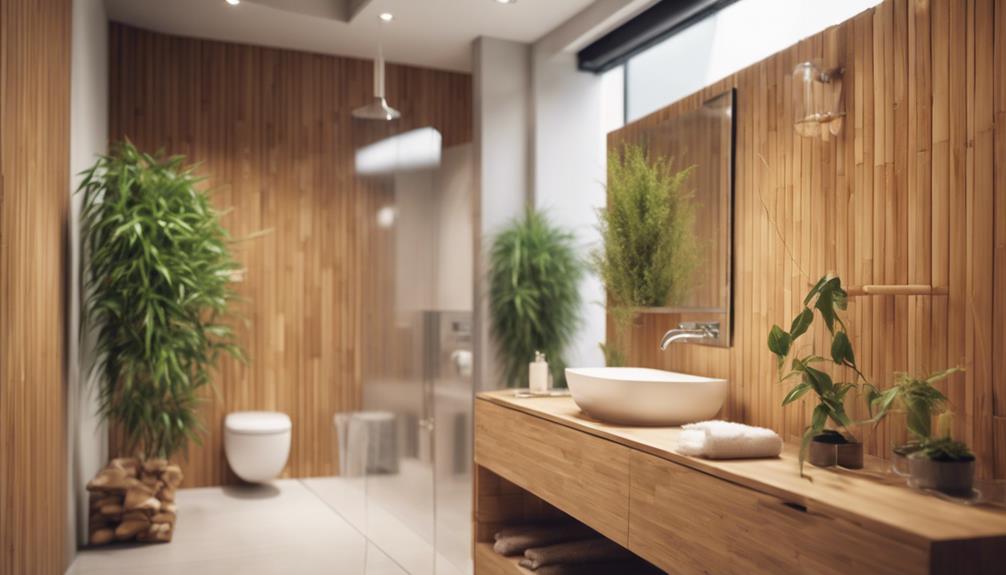
When you choose bamboo for your cabinetry or flooring, you're selecting a material that's fast-growing and sustainable. Unlike traditional hardwoods, bamboo can regenerate quickly without the need for replanting, making it an excellent choice for green building.
Additionally, consider using low-VOC (volatile organic compounds) paints and finishes. These products minimize the release of harmful chemicals into your home, improving indoor air quality while also protecting the planet.
Don't forget about the smaller details. Opting for hardware made from recycled metal can add a unique touch to your bathroom while contributing to waste reduction. By focusing on sustainable materials, you're not just renovating; you're investing in a healthier, more sustainable future. It's a smart move that pays off for both you and the environment.
Energy Conservation Measures
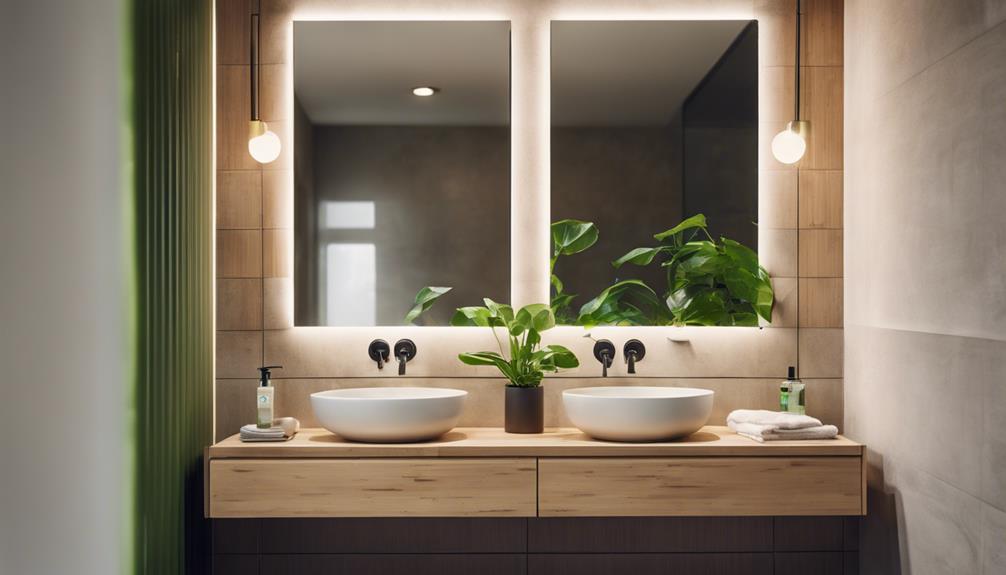
You can drastically reduce your bathroom's energy consumption by focusing on efficient fixtures and smart technology. Start by installing LED lights instead of traditional incandescent bulbs. LEDs use at least 75% less energy and last 25 times longer, shining a light on savings without compromising quality.
Next, consider a high-efficiency dual-flush toilet. It uses significantly less water for liquid waste than for solid, slashing both your water and heating bills.
Don't overlook your showerhead. Opting for a low-flow model can cut your water usage by about half, greatly reducing the energy needed to heat that water. Pair this with a tankless water heater, which ensures you're only heating the water you use, avoiding the energy waste of keeping a full tank hot 24/7.
Indoor Air Quality Standards
Maintaining excellent indoor air quality in your bathroom is crucial for both health and comfort. Green building standards focus on ensuring that ventilation is effective and that harmful pollutants are minimized. You'll find that these standards specify the use of exhaust fans that expel moist, polluted air directly outside rather than into your attic or between walls where problems can develop.
You should also consider the materials you're using in your bathroom. Volatile organic compounds (VOCs) can off-gas from some paints, sealants, and composite wood products, degrading air quality. Opt for low-VOC or VOC-free products to keep the air in your bathroom fresh and less harmful.
Additionally, proper sealing and venting of fixtures, such as toilets and showers, prevent mold growth, which is a common issue in bathrooms and can significantly affect air quality.
Moreover, when planning the layout and renovations, think about maximizing natural ventilation. A window or skylight can enhance air flow and reduce the reliance on artificial ventilation systems, which are energy-intensive. By integrating these green building practices, you'll not only ensure a healthier environment but also contribute to the sustainability of your home.
Waste Reduction Strategies
Implementing effective waste reduction strategies in your bathroom plays a key role in promoting sustainability. You'll not only minimize your ecological footprint but also enhance the efficiency and longevity of your bathroom's materials and resources.
Firstly, consider the products you're using. Opt for bulk items and those with minimal packaging to reduce waste generation. You can also look for products made from recycled materials. This approach isn't just about buying; it's about fostering a cycle of sustainability that ensures the resources are continuously reused.
Next, implement a robust recycling system. Don't overlook the potential of items typically discarded in the bathroom. For instance, many personal care products come in recyclable containers. By having a dedicated recycling bin in your bathroom, you're more likely to remember to recycle these items rather than tossing them in the trash.
Additionally, consider the use of refillable dispensers for soaps and shampoos to reduce the need for single-use plastics. This shift not only cuts down on your plastic waste but often proves more economical in the long run.
Eco-Friendly Fixture Selection
After focusing on waste reduction, it's important to also look at the fixtures in your bathroom. Choosing eco-friendly options can significantly lower your environmental footprint. Start by considering water-efficient fixtures like low-flow toilets, showerheads, and faucets. These aren't just good for the planet; they'll cut down your water bill too.
When selecting a toilet, consider models that use less than 1.28 gallons per flush. This is a step below the federal standard and can save thousands of gallons per year.
For faucets and showerheads, look for those labeled with a WaterSense certification. These are designed to use at least 20% less water than standard models.
In terms of materials, think sustainable. Choose fixtures made from recycled or renewable materials. For instance, recycled glass or reclaimed wood can add a unique touch to your bathroom while being kind to the earth.
Don't overlook durability. Eco-friendly doesn't just mean made from green materials, but also fixtures that will last longer and reduce waste in the long run. Opt for quality brands with solid warranties. Investing in fixtures that won't need frequent replacements is both eco-conscious and economical.
Innovative Green Technologies
Exploring innovative green technologies can elevate your bathroom's sustainability to new heights. You've likely heard of low-flow faucets and dual-flush toilets, but the world of green tech offers even more. Consider gray water systems which reuse water from your sink and shower for toilet flushing, greatly reducing the need for fresh water.
Smart showers are another game-changer. These systems can track water usage and temperature, adjusting in real-time to minimize waste while ensuring comfort. You're not just saving water; you're optimizing its use with technology that learns your habits and adjusts accordingly.
Don't overlook the potential of advanced materials. Recycled glass countertops and tiles made from reclaimed porcelain can transform waste materials into beautiful, functional elements of your bathroom design. These materials aren't only eco-friendly but also add unique aesthetics to your space.
Lastly, think about incorporating a solar-powered water heating system. While the initial setup might be a bit costly, the long-term savings and reduced carbon footprint can make it a worthwhile investment. You're not just building a bathroom; you're crafting an eco-friendly haven that aligns with cutting-edge sustainability practices.
Certification and Compliance Requirements
Navigating the myriad of certification and compliance requirements is crucial when aiming to meet green building standards for your bathroom. You'll find that each certification has its own set of criteria designed to ensure that environmental, health, and efficiency goals are met.
Two prominent certifications you might consider are the Leadership in Energy and Environmental Design (LEED) and the National Green Building Standard (NGBS).
LEED focuses on water efficiency, sustainable site selection, and material use. To comply, you'll need to choose fixtures that minimize water use, incorporate recycled materials, and ensure proper ventilation. You're also required to submit documentation proving that your bathroom meets these stringent standards.
On the other hand, NGBS provides a benchmark for residential buildings that include performance metrics across various sustainability categories. For your bathroom, you'll need to demonstrate how your design conserves water and energy, perhaps by installing low-flow faucets and energy-efficient lighting.
Frequently Asked Questions
How Do Green Building Standards Affect Property Resale Value?
Green building standards can boost your property's resale value by making it more attractive to eco-conscious buyers. They often reduce utility costs, which is a major selling point in today's market.
Are Green Bathrooms More Costly to Maintain?
You'll find that maintaining green bathrooms isn't necessarily more expensive. It depends on the materials and technologies used. Often, the energy and water savings can offset any additional maintenance costs over time.
How Long Does Certification for a Green Bathroom Take?
Certification times vary, but you'll typically wait a few weeks to several months, depending on the specific standards and the complexity of your project. It's essential to plan accordingly to avoid any delays.
Can Existing Bathrooms Be Retrofitted to Meet Green Standards?
Yes, you can retrofit existing bathrooms to meet green standards. It involves updating fixtures, reducing water usage, and using sustainable materials. You'll enhance energy efficiency and potentially increase your property's value.
Do Green Building Standards Vary by Country or Region?
Yes, green building standards can vary widely by country or region, reflecting local environmental conditions, resources, and regulatory frameworks. You'll find different requirements and certifications depending on where you're looking to build or renovate.
Conclusion
You've explored the essential green building standards for bathrooms, from water-saving techniques to choosing eco-friendly fixtures. By integrating these practices, you'll not only conserve resources but also enhance indoor air quality and reduce waste. Embrace innovative technologies and sustainable materials to further your impact. Remember, meeting certification requirements isn't just about compliance; it's about contributing to a healthier planet. Start implementing these changes in your bathroom project to make a significant environmental difference.
Related articles: 3 Key Tips for Green Bathroom Building Standards · What Drives Commercial Construction Costs in the Capital Region · Masonry Contractor New Haven Connecticut



Leave a Reply