


As you consider renovating your bathroom to be more eco-friendly, you'll find that seasoned builders emphasize several key strategies. They often recommend installing low-flow toilets and showerheads which significantly reduce water usage without sacrificing efficiency. To improve air quality while minimizing environmental impact, opt for low-VOC paints and bamboo cabinetry, both known for their sustainability and minimal toxic emissions. Energy-efficient LED lighting paired with motion sensors can also cut down on your power bill. These professionals know that integrating smart technology enhances utility control, ensuring further conservation of resources. Discover more unique tips and tricks that'll transform your bathroom into an eco-haven.
Choosing Sustainable Materials
When renovating your bathroom, selecting sustainable materials is crucial for minimizing environmental impact. You'll want to look for products that not only reduce harm to the environment but also promote indoor air quality and long-term durability.
Start with recycled glass tiles for your walls or floors. They're not just eco-friendly; they also add a unique, artistic touch to your space.
For countertops, consider recycled glass or composite materials made from recycled plastics and paper. These options are both sustainable and stylish, offering a variety of colors and patterns.
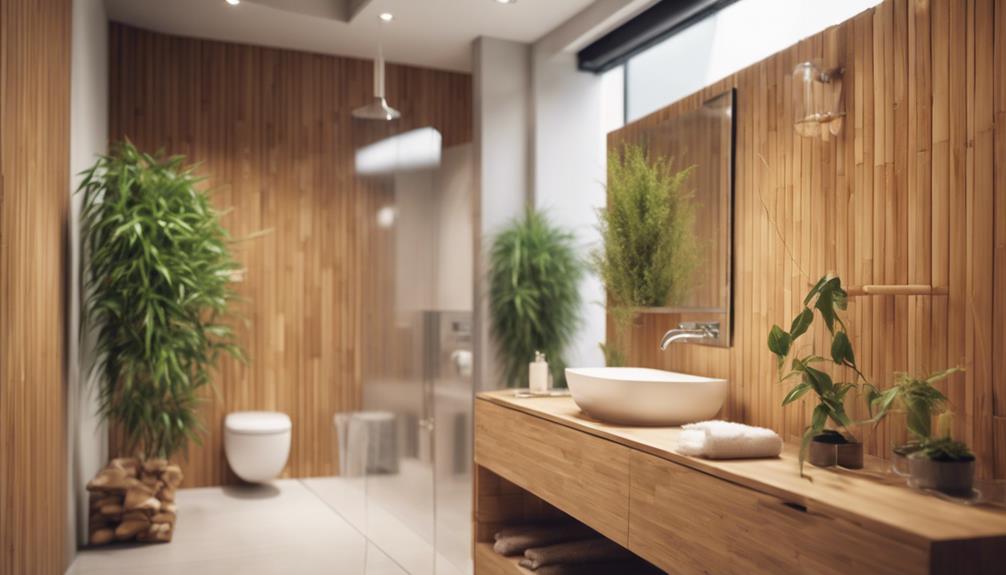
Bamboo is another excellent choice for cabinetry and flooring. It's a fast-growing, renewable resource that's tougher and more resilient than many traditional hardwoods. Additionally, bamboo has a naturally light color, which can help keep your bathroom feeling bright and airy.
Don't overlook the paint on your walls. Opt for low-VOC or zero-VOC paints to maintain better indoor air quality. These paints don't release the volatile organic compounds that traditional paints do, which can be harmful to both your health and the environment.
Water-Saving Fixtures Essentials
Installing water-saving fixtures is a key step in transforming your bathroom into a more sustainable space. You'll significantly reduce your water usage and lower your bills by choosing the right products. Let's dive into the essentials you should consider.
Firstly, consider a low-flow toilet. These toilets use less than 1.28 gallons per flush compared to older models that use up to 7 gallons. Opting for one can save thousands of gallons of water yearly. If a new toilet isn't in your budget, think about installing a toilet tank bank or a flush converter to minimize water use.
Next, look at low-flow showerheads and faucets. These fixtures can cut water flow to around 1.5 gallons per minute without sacrificing performance. You won't even notice the difference in pressure, but you'll see it on your water bill!
Don't overlook faucet aerators — small attachments that reduce flow while maintaining pressure. They're inexpensive, easy to install, and can save a significant amount of water.
Energy Efficient Lighting Options
After outfitting your bathroom with water-saving fixtures, you'll also want to consider upgrading to energy-efficient lighting options. These choices not only reduce your energy consumption but also cut down on your utility bills.
Firstly, consider LED lights. They're a top pick because they use at least 75% less energy and last 25 times longer than incandescent lighting. You'll find a variety of LED options that can match the aesthetic of any bathroom, from modern to classic. Plus, many LED fixtures are designed for damp spaces, making them perfect for bathrooms.
Next, think about installing motion sensors or timers with your lighting setup. This technology ensures lights are only on when needed, preventing energy waste. It's especially useful in guest bathrooms that aren't used frequently.
For a more natural approach, maximize the use of daylight. If privacy allows, enlarge windows or add skylights. Natural light doesn't just save electricity; it also helps your bathroom feel larger and more open.
Lastly, when selecting your fixtures, look for those with Energy Star ratings. These products meet strict efficiency guidelines set by the U.S. Environmental Protection Agency and assure you of their energy-saving capabilities.
Low-VOC Paints and Sealants
As you continue making eco-friendly choices for your bathroom, consider using low-VOC paints and sealants. VOCs, or volatile organic compounds, are chemicals found in many traditional paints and sealants, which release toxins into the air as they dry. These emissions can affect indoor air quality and pose long-term health risks.
Opting for low-VOC products means you're choosing safer alternatives that don't compromise your health or the environment. These paints and sealants have been specially formulated to reduce emissions without sacrificing quality or durability. You'll find that they apply just as smoothly and last as long as their conventional counterparts, but without the harsh odors and chemicals.
Furthermore, using low-VOC products helps in maintaining better air quality inside your home. This is especially crucial in spaces like bathrooms, where moisture can often trap pollutants, making them linger longer than they'd in other areas of your home.
Recycled Material Innovations
Now consider incorporating recycled materials into your eco-friendly bathroom design. You're not just building a bathroom; you're championing sustainability.
Recycled glass tiles offer a vibrant touch that's both visually appealing and kind to the planet. These tiles are made from discarded glass bottles and can be used for your shower walls or as a colorful backsplash.
Don't stop there. Reclaimed wood can transform your space too. Imagine a countertop or a custom vanity crafted from wood salvaged from old buildings or ships. Each piece tells a story, and using reclaimed wood means you're reducing the demand for new timber, preserving forests and the habitats they support.
Recycled plastic is another frontier. Innovative companies are turning plastic waste into durable, waterproof composite materials ideal for flooring or shower enclosures. These products often come in a range of styles and patterns, proving that eco-friendly doesn't mean sacrificing style.
Efficient Waste Management Strategies
Turning to efficient waste management strategies, you'll discover that reducing your environmental footprint is as simple as rethinking how you dispose of bathroom waste.
First off, consider installing a dual-flush toilet. It's a game-changer, allowing you to choose a lower water volume for liquid waste and a higher one for solids, significantly cutting down on water usage.
Next, think about integrating a greywater system. This setup redirects water from your sink and shower to flush toilets or water gardens, essentially using the same water twice. It's a smart move that halves your water waste with minimal effort.
Don't forget the small stuff either. Opt for biodegradable or recyclable personal care products. Things like bamboo toothbrushes, refillable shampoos, and organic cotton towels make a big difference over time. Every item that avoids the landfill counts.
And lastly, get serious about what you flush. Many items labeled "flushable" like certain wipes and hygiene products really aren't, leading to clogs and environmental damage. Stick with toilet paper or consider installing a bidet attachment for an even more sustainable approach.
Natural Light Maximization Techniques
Harness the power of natural light in your bathroom to not only save on energy costs but also to enhance the room's ambiance. You'll find that with the right design choices, your space can become both more eco-friendly and inviting.
Start by considering the placement of windows. Strategically positioned, larger windows can flood your bathroom with sunlight, reducing the need for artificial lighting during the day. Opt for frosted or textured glass to maintain privacy without sacrificing light.
Skylights are another brilliant option, especially if you're limited by wall space or surrounding buildings. They draw light from above, which isn't only effective but also creates a sense of openness and height in the room.
Don't forget about the orientation; a skylight facing north can provide consistent, indirect light that won't overwhelm the space at any time of the day.
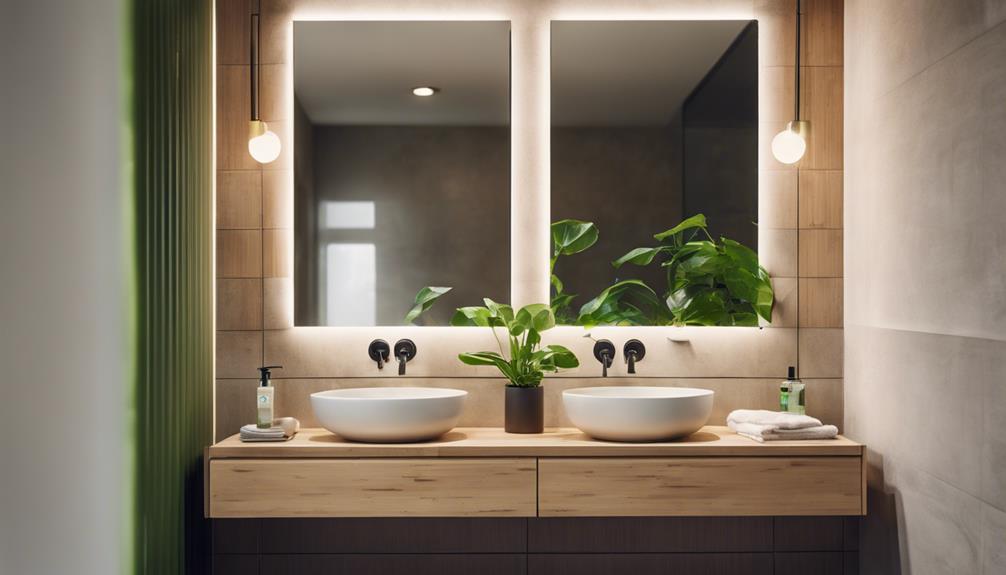
Lastly, reflect natural light to maximize its reach. Using mirrors and high-gloss finishes on fixtures or tiles can effectively bounce light around the room, making it appear larger and more luminous. You'll be amazed at how these simple adjustments can transform your bathroom into a bright and sustainable sanctuary.
Heat Reducing Design Features
After exploring how natural light can enhance your bathroom's ambiance, consider how your design choices can also reduce unwanted heat. Opting for light-colored finishes is a smart start. Light hues don't absorb heat as much as darker ones, keeping your space cooler.
You might think about choosing reflective surfaces for countertops or cabinetry, which will bounce back sunlight rather than absorbing it.
Installing proper ventilation is crucial. An energy-efficient exhaust fan doesn't just prevent mold; it also helps expel hot air, maintaining a comfortable temperature. Don't overlook the placement of windows or skylights; strategic positioning can maximize airflow and reduce reliance on artificial cooling.
Consider the role of plants too. They're not only decorative but functionally help to regulate indoor temperatures by releasing moisture into the air. This natural process, called transpiration, can cool your surroundings significantly.
Lastly, high-tech glass options like low-emissivity (low-E) coatings can be a game-changer. These coatings reflect infrared light, keeping heat out without compromising on natural light entry. By incorporating these features, you're not just building an eco-friendly bathroom; you're ensuring it's comfortable, regardless of the weather outside.
Long-Lasting Flooring Solutions
Shifting focus to the floor, consider durable and sustainable options for your eco-friendly bathroom. You'll want materials that stand the test of time, reduce your environmental footprint, and maintain their beauty under constant humidity and use.
Cork is a standout choice. It's naturally resistant to mold, mildew, and water, which are crucial in a bathroom setting. Plus, cork flooring is soft underfoot—a bonus when you step out of the shower.
Another excellent option is bamboo. Known for its strength and durability, bamboo also grows quickly, making it a sustainable powerhouse.
If you're leaning towards a classic look, consider recycled ceramic or porcelain tiles. They offer a vast range of styles and are incredibly hard-wearing. Ensure they're properly sealed to prevent water damage and extend their lifespan.
Linoleum, made from natural materials like linseed oil and jute, is another eco-friendly warrior. It's biodegradable, retains heat well, and comes in various colors and patterns.
Smart Home Technologies Integration
As you upgrade your eco-friendly bathroom, integrating smart home technologies can significantly enhance both convenience and energy efficiency. Imagine controlling your shower's temperature, lights, and even ventilation with just a few taps on your smartphone or through voice commands. This isn't just about luxury; it's about optimizing energy use and minimizing waste.
Smart thermostats can adjust the heating in your bathroom based on usage patterns and outside weather, ensuring you're not overheating the room when it's not in use.
Similarly, smart lighting systems equipped with motion sensors ensure lights are only on when needed, dramatically cutting down on your energy bills.
Water conservation is another critical aspect. Smart showers and faucets with eco-modes can reduce water flow without compromising on performance, saving significant amounts of water over time. These fixtures often provide feedback on your water usage, encouraging more sustainable habits.
Lastly, consider a smart mirror that not only displays time and weather but also offers tips on energy conservation tailored to your daily routines. Integrating these smart technologies not only makes your life easier but also supports your commitment to an eco-friendly lifestyle. You'll enjoy the modern conveniences while knowing you're making a sustainable choice.
Frequently Asked Questions
How Does Eco-Friendly Construction Impact Overall Bathroom Maintenance Costs?
Eco-friendly construction typically reduces your bathroom maintenance costs by using durable, sustainable materials that last longer and require less repair, ultimately saving you money on frequent fixes and replacements.
Can Eco-Friendly Designs Enhance Property Resale Value?
You'll find that incorporating eco-friendly designs in your bathroom can significantly enhance your property's resale value. Buyers often value sustainability, leading to potentially higher offers and a quicker sale.
Are There Eco-Friendly Options for Small Bathrooms?
Yes, you've got plenty of eco-friendly options for small bathrooms. Consider installing low-flow fixtures, using recycled materials, and incorporating a compact design to maximize space while minimizing environmental impact.
How Long Does the Installation of Eco-Friendly Fixtures Typically Take?
You'll find that installing eco-friendly fixtures typically takes about the same time as regular ones, ranging from a few hours to a full day, depending on what you're having installed.
What Are Common Challenges in Sourcing Eco-Friendly Bathroom Materials?
You'll find sourcing eco-friendly bathroom materials challenging due to limited availability, higher costs, and fewer vendors. Ensure you're prepared to research extensively and possibly compromise on aesthetics to meet sustainability goals.
Conclusion
You've uncovered the secrets that eco-friendly bathroom builders know, from selecting sustainable materials to integrating smart technologies. By choosing water-saving fixtures, energy-efficient lighting, and low-VOC products, you're not just building a bathroom—you're crafting a sanctuary that respects the planet. Embrace these innovations and techniques to ensure your bathroom is both beautiful and benevolent. Remember, every choice counts towards a greener future. So go ahead, transform your space and make a lasting impact.
Related articles: How to Install Eco-Friendly Bathroom Fixtures · Why Choose Eco-Friendly Fixtures for Your Bathroom? · 3 Best Eco-Friendly Bathroom Fixture Installations




Leave a Reply