


You can make your bathroom remodel eco-friendly with seven low-impact techniques. Opt for sustainable materials like recycled glass tiles and bamboo for aesthetics and durability. Install low-flow water fixtures to cut down on your water usage while maintaining strong pressure. Enhance natural lighting by enlarging windows and using reflective surfaces to brighten the space. Incorporate recycled elements such as reclaimed wood and salvaged fixtures to add unique character. Choose non-toxic paints to keep your indoor air quality healthy. Implement energy-efficient heating like radiant floors to lower energy consumption. Focus on long-term durability with quality materials that withstand moisture and prevent mold. Discover how each choice not only preserves the environment but also saves you money over time.
Use Sustainable Building Materials
When remodeling your bathroom, always consider using sustainable building materials. These options aren't just good for the planet; they're often more durable and can add a unique aesthetic appeal to your space.
Start by looking into recycled glass tiles for your shower area. They come in a variety of colors and finishes, ensuring you don't sacrifice style for sustainability.
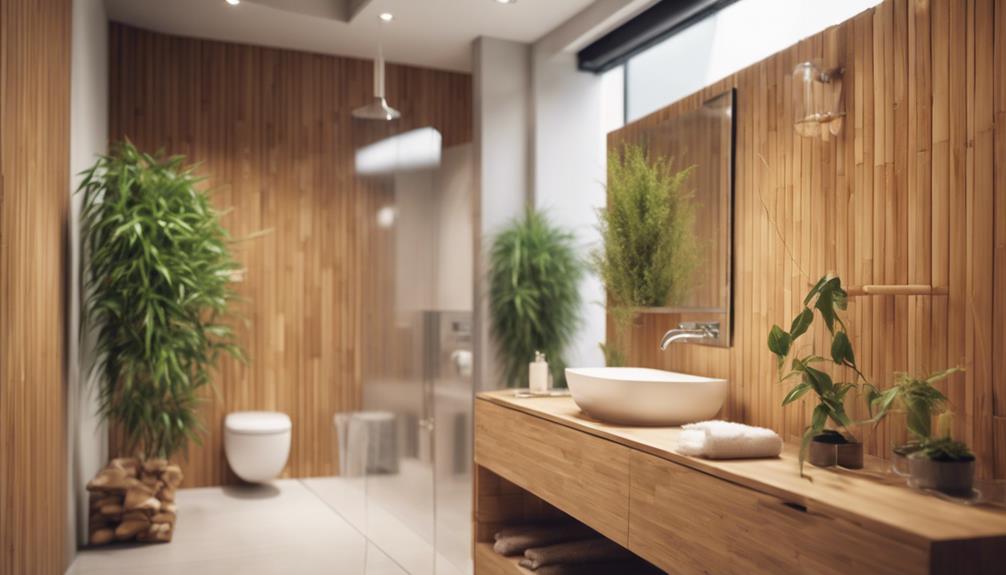
Next, think about bamboo or reclaimed wood for your cabinetry. Bamboo grows quickly, making it a renewable resource, while reclaimed wood adds character and reduces the demand for new timber. Both materials are sturdy and have a lower environmental footprint compared to traditional hardwoods.
For your countertops, recycled quartz is a fantastic choice. It's made from leftover stone pieces, reducing waste and requiring less energy for production. Plus, it's incredibly resilient and easy to maintain, keeping your bathroom looking great for years.
Install Low-Flow Water Fixtures
To further reduce your environmental impact during a bathroom remodel, consider installing low-flow water fixtures. These devices are designed to use significantly less water than standard models, which means you'll be slashing your water usage and your bills at the same time.
Low-flow doesn't mean low pressure. Modern technology allows these fixtures to provide adequate water pressure with less water; they simply use air or specialized flow patterns to make the reduction unnoticeable. You'll find that low-flow toilets, showerheads, and faucets perform just as well, if not better, than their traditional counterparts.
Installing these fixtures is straightforward and can often be a DIY project. You'll typically need just a few tools and the ability to follow basic instructions. If you're not confident in your plumbing skills, hiring a professional can ensure that everything is installed correctly without much hassle.
Optimize Natural Lighting
Optimizing natural lighting in your bathroom not only enhances the ambiance but also reduces the need for artificial lighting during the day. By allowing sunlight to flood the space, you'll save on energy costs and enjoy a naturally brighter area.
To start, consider enlarging your windows. Larger windows or skylights can dramatically increase the amount of sunlight entering the room. Choose windows with energy-efficient frames and glass that minimize heat loss and maintain your privacy.
Placement is key. Positioning windows or a skylight facing north or south minimizes direct sunlight, which can be harsh and overheat the room at times. Instead, you'll get even, diffused light that changes subtly throughout the day.
If you're worried about privacy, frosted glass or light-diffusing window treatments can offer a practical solution without blocking the light.
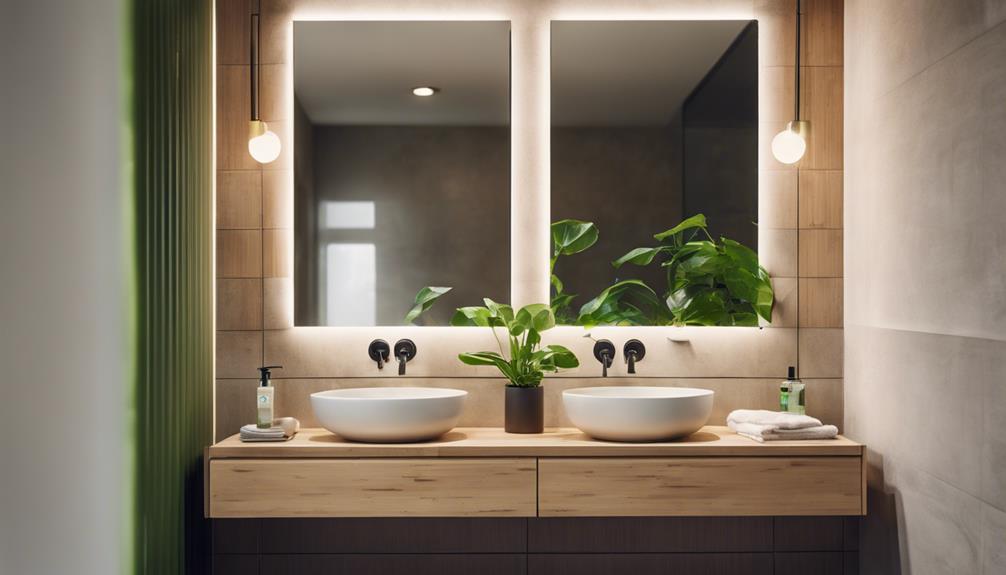
Reflective surfaces can also play a significant role in enhancing natural light. Install glossy tiles, mirrors, or use a light color palette for walls and floors. These elements reflect light, brightening your space more effectively.
Incorporate Recycled Elements
Incorporating recycled elements into your bathroom remodel not only conserves resources but also adds a unique charm to your space. You can start by looking for reclaimed wood, which can be used for cabinetry or shelves. It's not just about saving trees; reclaimed wood often features a rich history and character that new materials can't match.
Consider using recycled glass tiles for your backsplash or shower. These tiles are made from broken down, reused glass and come in a variety of colors and finishes, allowing you to customize while being eco-conscious.
Additionally, salvaged fixtures, like sinks or bathtubs, can be restored to become beautiful, functional pieces with stories to tell. Not only are you preserving the craftsmanship of the past, but you're also reducing the demand for new, raw materials.
Don't overlook smaller accessories made from recycled materials. Items such as towel racks, mirror frames, and even light fixtures are available in recycled materials that maintain quality and add an eco-friendly touch. Each choice you make helps reduce landfill waste and minimizes the environmental footprint of your remodel.
Choose Non-Toxic Paints
Choosing non-toxic paints for your bathroom remodel is crucial for maintaining healthy indoor air quality. You're not just freshening up the space; you're also safeguarding your health.
Traditional paints often contain volatile organic compounds (VOCs), which can release harmful chemicals into the air long after they've dried.
Opt for zero-VOC or low-VOC paints. These options are less harmful and contribute to a healthier living environment by minimizing your exposure to dangerous chemicals. They're particularly important in the bathroom, where ventilation may be limited, and moisture levels are high.
When selecting your paint, don't be swayed by color alone. Check the labels for certifications. Look for products certified by reputable organizations like Green Seal or the Environmental Protection Agency's Safer Choice program. These endorsements ensure the paint meets strict chemical emissions standards and is safer for both the environment and your home.
Implement Energy-Efficient Heating
To reduce your energy bills and enhance sustainability, consider installing energy-efficient heating solutions in your bathroom. Options like radiant floor heating not only keep your toes warm but also use less energy than traditional heating methods. This system works by distributing heat evenly across the floor, making it more effective and efficient.
You can also look into energy-efficient water heaters. Tankless water heaters, for instance, heat water on demand rather than storing it, which significantly reduces energy consumption. They're compact, can be installed under a cabinet or in a closet, saving precious space in your bathroom.
Don't forget about proper insulation. Insulating your bathroom walls and floors can prevent heat loss, keeping your bathroom warm with less energy. This step is crucial for maximizing the efficiency of any heating system you install.
Lastly, consider a smart thermostat. These devices allow you to control the temperature remotely and adjust settings based on your usage patterns. It's a simple way to ensure that you're not heating your bathroom more than necessary, thus saving energy and money.
Focus on Long-Term Durability
Focusing on long-term durability when remodeling your bathroom not only enhances its usability but also reduces the need for frequent repairs. You'll want to choose materials that can withstand the test of time and usage. Opt for high-quality tiles and solid fixtures that are known for their longevity.
It's tempting to go for cheaper options, but they often lead to higher costs in the long run due to replacements and fixes.
Consider using ceramic or porcelain tiles, which are both stylish and hard-wearing. When it comes to your plumbing fixtures, stainless steel or brass offers durability against corrosion and everyday wear.
Investing in a good quality paint designed for humid environments can prevent peeling and mold growth, saving you trouble down the line.
Don't forget about the cabinetry. Solid wood may be a bit pricier, but it withstands moisture better than most composites. If solid wood stretches your budget, look for high-quality laminates or treated wood alternatives.
Frequently Asked Questions
How Can I Finance an Eco-Friendly Bathroom Remodel?
You can finance your bathroom remodel by applying for green loans, using home equity, or exploring government incentives for eco-friendly renovations. Research local options that specifically support sustainable building practices to maximize benefits.
Are There Eco-Friendly Options for Bathroom Insulation?
Yes, you've got several eco-friendly insulation options for your bathroom. Consider materials like sheep's wool, cotton denim, or cellulose, which are sustainable and effective in reducing energy usage and keeping moisture out.
What Are the Best Plants for a Bathroom Environment?
You'll find that spider plants, peace lilies, and ferns thrive in humid bathroom environments. They're low-maintenance, purify the air, and add a touch of greenery, making them perfect for sprucing up your space.
How Do I Properly Dispose of Old Bathroom Fixtures?
To properly dispose of old bathroom fixtures, you should contact local recycling centers or waste management services. They'll guide you on eco-friendly disposal options, ensuring you're not contributing to landfill waste unnecessarily.
Can Smart Technology Be Integrated Into Eco-Friendly Bathrooms?
Yes, you can integrate smart technology into eco-friendly bathrooms. Choose devices that monitor water usage and energy-efficient fixtures to reduce your environmental impact while enhancing convenience and modernizing your space.
Conclusion
You've got all the tools you need to create an eco-friendly bathroom that doesn't skimp on style or function. By choosing sustainable materials, installing low-flow fixtures, and using natural light, you're not just remodeling; you're making a statement about the importance of environmental responsibility. Opt for recycled elements and non-toxic paints to keep your space healthy and vibrant. Lastly, focusing on durability ensures your bathroom will stand the test of time, saving both resources and money. Happy remodeling!
Related articles: What Secrets Do Eco-Friendly Bathroom Builders Know? · How to Install Eco-Friendly Bathroom Fixtures · Why Choose Eco-Friendly Fixtures for Your Bathroom?




Leave a Reply