


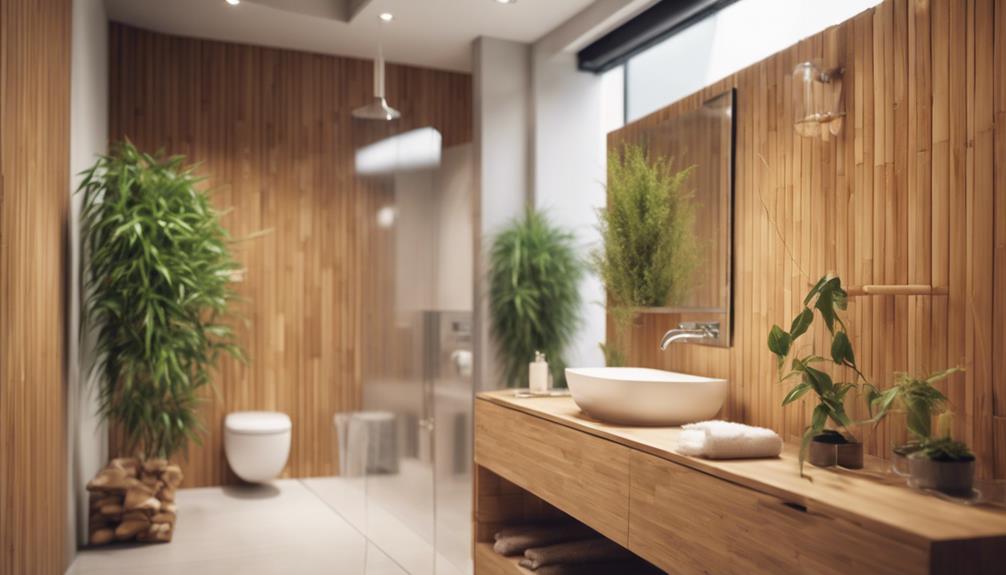
When you're remodeling your bathroom and want to go green, consider materials like bamboo flooring, recycled glass tiles, and reclaimed wood vanities. Bamboo is a fast-renewing resource that's also durable and moisture-resistant. Recycled glass tiles offer a colorful, eco-friendly option that's easy to maintain, while reclaimed wood adds unique character and supports sustainability by reusing materials. Don't forget about low-flow water fixtures to reduce your water use. These choices aren't just good for the planet; they can also increase your home's value and aesthetic appeal. There's plenty more insight on how these options can enhance your space.
Benefits of Eco-Friendly Materials
Using eco-friendly materials in your bathroom isn't just good for the planet; it benefits you directly. Imagine stepping into a space that's not only stylish but also contributes to a healthier environment.
Materials like bamboo, cork, and reclaimed wood are natural, renewable, and reduce the toxic burden in your home. They don't off-gas harmful chemicals like some conventional materials do, which means you're breathing cleaner air.
Moreover, these materials often come with superior durability and moisture resistance, perfect for the damp bathroom environment. You'll find they require less maintenance over time, saving you hassle and money.
For instance, bamboo flooring is famously resilient and can handle the constant wear of bathroom traffic. It's also quick to regenerate, making it a sustainable champion.
Choosing these materials can also increase your home's value. Today's buyers are increasingly looking for eco-friendly features that promise lower energy costs and healthier living spaces.
Recycled Glass Tile Options
As you explore eco-friendly materials for your bathroom, consider recycled glass tile as a vibrant and sustainable alternative. These tiles aren't just beautiful; they're crafted from repurposed glass, reducing landfill waste and minimizing the demand for new raw materials. You'll find that they come in a myriad of colors and finishes, perfect for customizing your space to reflect your personal style.
Recycled glass tiles are incredibly durable and resistant to stains, which makes them ideal for the moist environment of a bathroom. They don't absorb moisture like other materials, so you'll find they maintain their lustrous appearance without harboring mold or mildew. This feature also makes them incredibly easy to clean, requiring just a simple wipe down with a damp cloth.
Moreover, these tiles are non-porous, which ensures that they don't release harmful chemicals or absorb odors, maintaining a healthier environment for your home. They're also a breeze to install, whether you're planning a DIY project or hiring a professional.
Incorporating recycled glass tiles in your bathroom not only elevates the aesthetic appeal but also champions environmental sustainability. You're making a choice that looks good and feels good, contributing positively to the planet while crafting a space that's uniquely yours.
Bamboo Flooring Advantages
Bamboo flooring offers several compelling benefits that make it an excellent choice for your bathroom renovation. Known for its durability and strength, bamboo can withstand the frequent moisture and humidity that bathrooms are subjected to. Unlike traditional hardwood, bamboo doesn't swell or warp easily, ensuring a longer lifespan and better performance in wet environments.
You'll also find that bamboo is remarkably sustainable. It grows incredibly fast, reaching maturity in about five years, compared to hardwoods that might need decades. This rapid growth cycle allows for quicker replenishment, reducing the strain on resources and making bamboo a top eco-friendly material for your bathroom.
Another plus is the aesthetic flexibility bamboo provides. It comes in a variety of styles and finishes, so you can easily match it with your existing decor. Whether you're aiming for a modern look or something more traditional, bamboo flooring can fit seamlessly into your design scheme.
Lastly, bamboo is relatively easy to install and maintain. You won't need to spend a lot of time on upkeep; regular sweeping and occasional mopping with a non-wax, non-alkaline, hardwood or bamboo floor cleanser will keep it looking its best. Thus, bamboo flooring isn't just practical and sustainable; it's also stylish and easy to care for, making it a smart choice for any bathroom renovation.
Low-Flow Water Fixtures
While bamboo flooring significantly enhances the sustainability of your bathroom, incorporating low-flow water fixtures can further reduce your environmental impact. These fixtures are designed to use significantly less water than standard models, making them a crucial choice for eco-conscious homeowners like you.
Low-flow toilets, showerheads, and faucets maintain high performance standards while using less water. For instance, a conventional showerhead might use around 2.5 gallons per minute (gpm), but a low-flow version uses 2 gpm or even less. This reduction might seem small, but it adds up quickly, saving thousands of gallons of water annually.
You'll see these savings reflected in your water bills, proving that sustainable choices can be economically wise too.
Moreover, the installation process for these fixtures isn't complicated. You can replace your existing fixtures without needing major renovations. This makes them an accessible upgrade that offers immediate benefits.
Reclaimed Wood Vanities
Reclaimed wood vanities offer a stylish and environmentally responsible option for updating your bathroom. By choosing reclaimed wood, you're not just adding unique charm and warmth to your space; you're also making an eco-friendly choice. This material comes from old buildings, barns, or other structures, ensuring that no new trees are cut down for your renovation.
You'll love how each piece has its own history, displayed in the distinctive grain patterns and nicks that tell a story. Plus, reclaimed wood is incredibly durable. It's already stood the test of time, which means it can handle the humid environment of your bathroom with ease. When sealed properly, reclaimed wood resists water damage and mold, making it an ideal choice for a vanity.
Opting for a reclaimed wood vanity also supports sustainable practices in the furniture industry. It encourages the reuse and repurposing of existing materials, reducing waste and the demand for virgin resources. You're not just selecting a piece of furniture; you're contributing to a greener planet.
Natural Linoleum Flooring
Natural linoleum flooring is a top choice for eco-conscious homeowners looking to upgrade their bathroom aesthetics and functionality. Made primarily from renewable materials like linseed oil, cork dust, tree resins, and jute backing, it's both sustainable and biodegradable. You'll love how it adds a warm, comfortable feel underfoot, a stark contrast to the coldness of traditional tiles.
This flooring isn't just about looks; it's incredibly durable and can handle the high humidity and frequent water exposure that bathrooms endure. Plus, it's resistant to scratches and scuffs, which means it'll keep looking great for years.
You won't have to worry about harsh chemicals either, as natural linoleum is non-toxic and free from volatile organic compounds (VOCs) that are often found in conventional vinyl flooring options.
Installing natural linoleum can be a straightforward DIY project, or you can have it professionally installed. Maintenance is a breeze as well; just a quick sweep and occasional mop with mild detergent will keep it pristine. It's also hypoallergenic, making it an ideal choice if you're sensitive to allergens.
Eco-Friendly Paint Choices
Moving from flooring to walls, your choice of paint can significantly impact the environmental friendliness of your bathroom renovation. When you're picking out paint, consider opting for eco-friendly varieties that don't just brighten up your space but also protect the planet.
Look for paints labeled as low-VOC or zero-VOC. VOCs (Volatile Organic Compounds) aren't only harmful to the environment but they can also affect your health by releasing toxic emissions into your home. These greener choices maintain better indoor air quality and are particularly crucial in smaller, less ventilated spaces like bathrooms.
Another sustainable option is paint made from natural ingredients such as water, plant oils, and mineral pigments. These materials are biodegradable and less likely to cause environmental damage during production and disposal. Some brands even offer recycled paint, made from leftover or returned paint that's been reprocessed, reducing waste and resource consumption.
Don't forget to check the packaging as well. Eco-friendly paint brands often use recycled or minimal packaging to further reduce their ecological footprint. By choosing these products, you're not just decorating your bathroom; you're also making a conscious decision to support sustainable practices in manufacturing and waste management.
Sustainable Lighting Solutions
Shifting our focus to lighting, consider the impact of your choices on both the environment and your energy bills. Opting for LED lighting is a great start. LEDs aren't just energy-efficient; they last longer than traditional bulbs, reducing waste and frequent replacements. You'll notice a significant decrease in your energy consumption, which translates to lower utility bills and a smaller carbon footprint.
You can also explore smart lighting systems. These allow you to control light intensity and turn lights on and off remotely, ensuring you use energy only when necessary. Integrating motion sensors can further enhance energy savings, as lights will only activate when you're in the room.
Don't forget about natural light—it's free and doesn't strain our planet's resources. Consider designing your bathroom layout to maximize sunlight exposure. Perhaps install a skylight or use frosted glass windows to maintain privacy while letting in plenty of natural light.
Frequently Asked Questions
How Do I Maintain Bamboo Flooring in a Humid Bathroom Environment?
To maintain your bamboo flooring in a humid bathroom, you'll want to regularly mop up any water and use a dehumidifier to control moisture levels. Additionally, apply a water-resistant sealant for extra protection.
Can Sustainable Materials Reduce Overall Bathroom Renovation Costs?
Yes, you'll find that using sustainable materials can often lower renovation costs. They're typically more durable and require less maintenance, saving you money in the long run on repairs and replacements.
Are There Allergy-Friendly Eco-Friendly Bathroom Materials?
You'll find that bamboo, cork, and recycled glass are great options for allergy-friendly, eco-friendly bathroom materials. They resist mold and don't emit harmful chemicals, making them perfect for your renovation.
How Long Do Recycled Glass Tiles Last?
Recycled glass tiles can last over 50 years if properly installed and maintained. They're durable and resist stains, making them a great choice for long-term use in your home.
What Certifications Should I Look for in Sustainable Bathroom Products?
You should look for certifications like FSC for wood and GreenGuard for low emissions. These ensure the products meet strict environmental standards, helping you choose truly sustainable options for your project.
Conclusion
You're making a positive impact by choosing sustainable materials for your bathroom. From recycled glass tiles to bamboo flooring, each option offers durability and style while conserving resources. Don't forget about low-flow fixtures to reduce water usage, and eco-friendly paints to keep your air quality pristine. Opting for reclaimed wood vanities and natural linoleum adds unique charm and sustainability. Finally, integrate sustainable lighting solutions to save energy. You're not just renovating; you're investing in our planet's future.
Related articles: 7 Eco-Friendly Materials for Bathroom Remodeling · Unlocking Secrets: Eco-Friendly Materials for Bathroom Renovations · Why Choose Eco-Friendly Materials for Bathroom Remodeling?




Leave a Reply