


When remodeling your bathroom, consider using eco-friendly materials like bamboo flooring, which is durable and quick to regenerate, or recycled glass tiles that add color while reducing landfill waste. Cork wall coverings are another great option; they're mold-resistant and provide excellent insulation. Don't overlook reclaimed wood vanities, which bring unique style and reduce deforestation, or low-flow fixtures that significantly cut down your water usage. These choices not only enhance your bathroom's aesthetic but also promote environmental sustainability. Exploring these options further could uncover even more benefits and innovative ways to create a green space in your home.
Bamboo Flooring Options
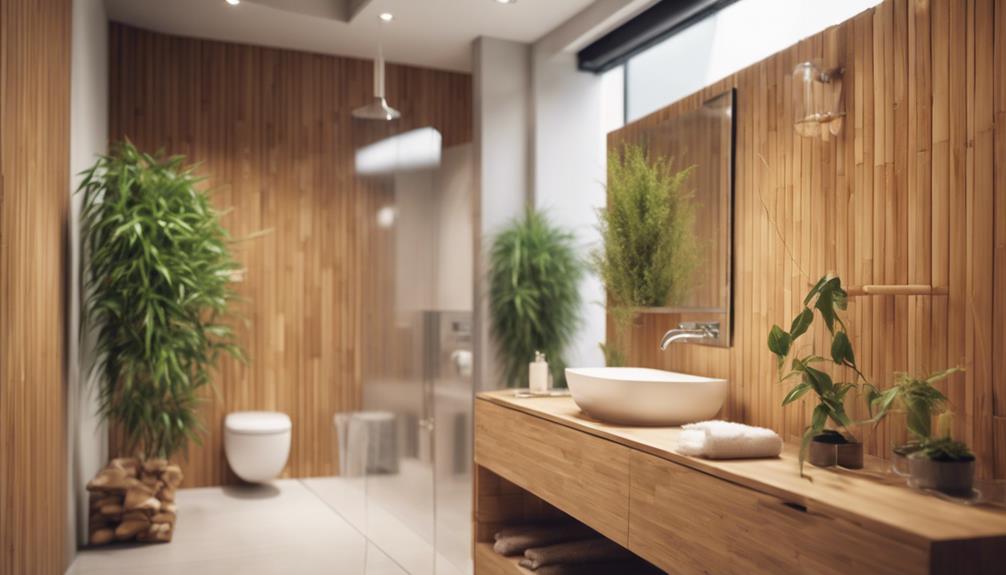
Bamboo, a rapidly renewable resource, offers a durable and attractive alternative for bathroom flooring. You'll find that bamboo floors can bring a warm, natural aesthetic to your space that few materials can match. Unlike traditional hardwoods, bamboo matures in as little as three to five years, significantly reducing its environmental impact. This quick maturation cycle allows for more sustainable harvesting practices, ensuring that bamboo forests can rejuvenate quicker than forests of oak or maple.
Choosing bamboo flooring means you're opting for a material that's not only eco-friendly but also remarkably resilient. Its natural hardness gives it a strong resistance to moisture and wear, making it ideal for the humid environment of a bathroom. You won't have to worry about it warping or staining easily, which is often a concern with other wood floors in damp areas.
Moreover, bamboo flooring comes in a variety of styles and finishes. Whether you prefer the light, airy feel of natural bamboo or a darker, carbonized look, there's a style to suit your taste.
It's also easier to install than many traditional flooring options. You can choose from planks that snap together for a DIY installation, saving you time and potentially reducing installation costs.
Recycled Glass Tile Features
Recycled glass tiles offer a stunning and sustainable option for your bathroom remodel. Crafted from repurposed materials, these tiles aren't just about beauty; they're also an eco-conscious choice that reduces landfill waste.
The manufacturing process of recycled glass tiles consumes less energy compared to new glass production, making them a greener alternative.
You'll find that these tiles come in a variety of colors, shapes, and sizes, allowing you to customize your space to fit your personal style while still making an environmentally friendly choice. Whether you're looking for a vibrant backsplash or a subtle shower wall, recycled glass tiles provide versatility. They're also remarkably durable and resistant to stains, which makes them ideal for the wet conditions in your bathroom.
Maintenance is a breeze as well; just a simple cleaning with mild soap and water will keep them looking as good as new. Unlike some other materials that might require strong chemicals for cleaning, recycled glass tiles can maintain their luster without harsh agents.
Opting for recycled glass tiles not only enhances the aesthetic of your bathroom but also supports sustainable living practices. By choosing these, you're contributing to a healthier planet.
Cork Wall Covering Benefits
Cork wall coverings are an excellent choice for bathroom remodeling, offering both functionality and environmental benefits. You'll appreciate how cork's natural properties make it mold and mildew resistant, a crucial feature in the bathroom's moist environment.
This material isn't just practical; it's also a sustainable choice. Cork is harvested from the bark of cork oak trees without harming the tree, allowing it to continue growing and absorbing CO2, which is great for your eco-conscious projects.
You'll find that cork also provides superb insulation, keeping your bathroom warmer in winter and cooler in summer, which can help cut down on your energy bills. Its sound-damping qualities can make your bathroom a quiet, peaceful retreat.
Comfort-wise, cork is naturally soft underfoot, a blessing when you step out of the shower or bath.
Style-wise, cork comes in a variety of colors and patterns. Whether you're looking for a natural, rustic look or something more polished and contemporary, cork can meet your aesthetic needs. It's easy to install and maintain, requiring just a sealing layer to keep it waterproof and looking fresh.
Opting for cork can transform your bathroom into a stylish, eco-friendly sanctuary.
Reclaimed Wood Vanity Styles
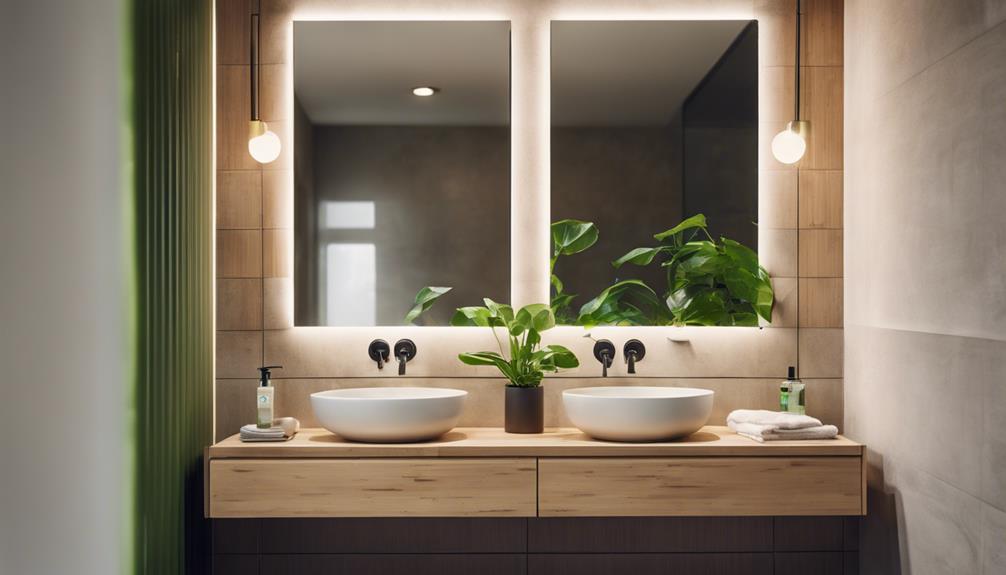
In recent years, reclaimed wood vanities have surged in popularity as more homeowners seek both unique style and sustainability in their bathroom remodels. You'll find that each piece of reclaimed wood brings its own history, character, and charm to your space, making your vanity not just functional but also a standout feature.
Opting for a reclaimed wood vanity means you're choosing a path less traveled. You're not just buying a piece of furniture; you're investing in a slice of history and giving it new life. The textures and tones vary widely, offering you a chance to have something truly one-of-a-kind.
From rustic to refined, these vanities can be styled to fit any aesthetic.
Think about the impact you're making as well. By repurposing old wood, you're reducing the demand for new timber and helping to minimize deforestation. It's a choice that feels as good as it looks.
Your reclaimed wood vanity can also be customized to fit your specific needs and taste. Whether it's the size, the finish, or the type of sink it accommodates, you can tailor it to ensure it perfectly complements your bathroom's design.
Low-Flow Fixtures and Sustainability
Switching to low-flow fixtures is a straightforward step you can take to significantly reduce water usage in your home. These innovative fixtures, including toilets, showerheads, and faucets, are designed to use less water than standard models without sacrificing performance. By installing low-flow toilets, you're not just cutting down on water consumption; you're also lowering your water bills and contributing to water conservation efforts.
Low-flow showerheads are another smart choice. They can save you up to 2,300 gallons per year. Unlike older models that simply reduced flow, modern low-flow showerheads use advanced technology to ensure you still enjoy a powerful shower experience. You won't even notice the difference—except when it comes to your utility bill!
Faucets equipped with low-flow aerators are equally effective. They reduce water flow while maintaining pressure, allowing you to use water more efficiently for everyday tasks like washing hands or brushing teeth.
Frequently Asked Questions
How Do I Maintain Bamboo Flooring in a High-Moisture Environment?
To maintain bamboo flooring in a high-moisture environment, you'll want to use dehumidifiers, ensure proper ventilation, and quickly wipe up any spills. Regularly clean with a damp mop and mild soap to prevent warping.
Can Recycled Glass Tiles Be Used in Shower Areas?
Yes, you can use recycled glass tiles in shower areas. They're resistant to mold and mildew, and they won't warp or stain. Just make sure they're properly sealed to prevent water damage.
Are Cork Wall Coverings Mold Resistant?
Yes, cork wall coverings are mold resistant because cork naturally repels water, mold, and mildew. It's a great choice if you're looking for a durable, low-maintenance option for your walls.
What Is the Lifespan of a Reclaimed Wood Vanity?
You'll find that a reclaimed wood vanity typically lasts about 15 to 20 years, but it can last longer with proper care and maintenance. It's durability largely depends on the initial quality and treatment.
How Much Water Do Low-Flow Fixtures Actually Save Annually?
Low-flow fixtures can save you up to 50% of your usual water usage annually. They're designed to conserve water by reducing the flow rate without compromising performance. It's an effective way to reduce your bills.
Conclusion
As you plan your bathroom remodel, consider these eco-friendly options to create a space that's both beautiful and sustainable. Bamboo flooring, recycled glass tiles, and cork wall coverings offer unique aesthetics without sacrificing environmental responsibility. Opt for a reclaimed wood vanity for a touch of rustic charm, and don't forget to install low-flow fixtures to reduce water usage. By choosing these materials, you're not just renovating your bathroom; you're also making a positive impact on the planet.
Related articles: 5 Tips for Choosing Sustainable Bathroom Materials · Eco-Friendly Materials Guide for Bathroom Remodeling · Is Your Bathroom Remodel Truly Sustainable?




Leave a Reply