

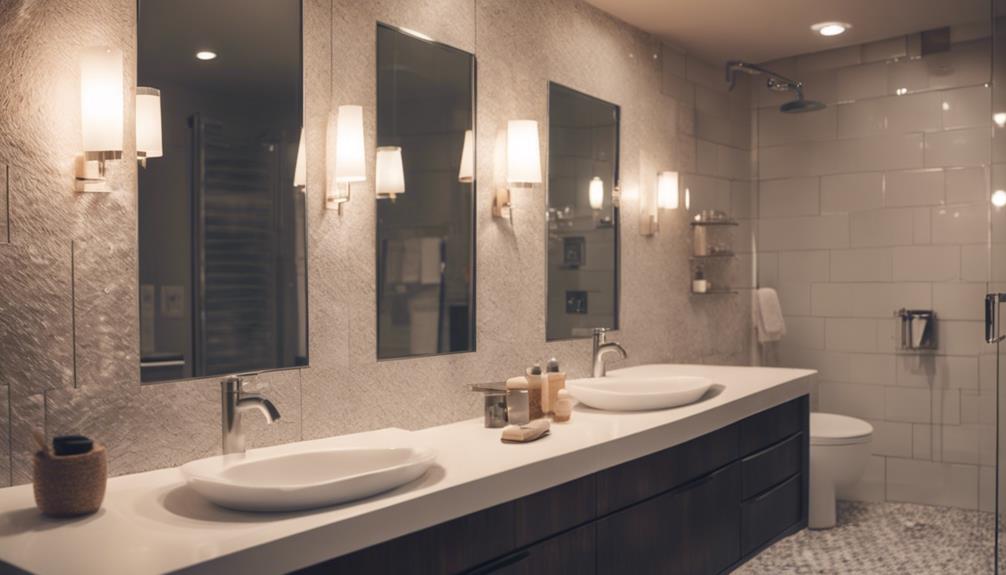
For your bathroom remodeling, consider using porcelain tiles, quartz countertops, tempered glass showers, stainless steel fixtures, and cement boards. Porcelain tiles are durable, moisture-resistant, and easy to maintain, while quartz offers unmatched resilience against scratches and stains, without needing sealing. Tempered glass, used in modern shower doors, enhances both the durability and aesthetics of your bathroom. Stainless steel fixtures resist corrosion and add a sleek look. Lastly, cement board is ideal for areas with high moisture as it prevents tile cracks and is fire-resistant. Exploring these materials can unlock a combination of longevity and style for your space.
Porcelain Tiles for Longevity
When considering materials for your bathroom remodel, few options offer the durability and elegance of porcelain tiles. You'll find that these tiles aren't just tough; they're also resistant to moisture, which is crucial in a bathroom environment. Porcelain can handle the high humidity and splashes of water that come with daily showers and baths without losing its luster or showing wear.
What's more, porcelain tiles come in an impressive array of styles and colors. Whether you're after a modern look with large, minimalistic tiles or something more classic like a faux-marble finish, porcelain offers versatility. You can match them to any decor style, ensuring they complement your vision perfectly.
Maintenance is a breeze too. You won't have to scrub relentlessly; occasional mopping with mild soap and water keeps them looking new. Unlike other materials that might require sealing or special cleaners, porcelain stands up to regular cleaning products without damage.
Quartz Countertops Resilience
Just as porcelain tiles bring durability and style to your bathroom floors and walls, quartz countertops offer unmatched resilience for your vanity surfaces. You'll find that quartz is exceptionally hardy, resisting scratches and stains better than many other materials.
It's a non-porous surface, meaning it won't harbor bacteria or viruses—a crucial feature in a bathroom setting.
What's more, quartz doesn't require the sealing that natural stone demands, saving you maintenance hassle and expense over time. Whether you're splashing water or spilling products, quartz stands up to the challenge without losing its luster.
It's also incredibly versatile, available in a wide range of colors and patterns that mimic natural stone or present unique, modern aesthetics.
You might wonder about the cost compared to other materials. While quartz can be pricier upfront, its durability means fewer replacements or repairs down the line. It's an investment in your home's value and your own peace of mind.
Glass Shower Durability
Glass shower doors elevate the aesthetic of any bathroom, but their durability is equally impressive. When you're considering a bathroom remodel, you might wonder how these elegant fixtures stand up to daily wear and tear. The good news is that modern glass shower doors are designed to last.
Most glass doors are crafted from tempered glass, which is four to five times stronger than standard glass. This means it can withstand bumps and knocks during your hectic mornings. Additionally, tempered glass is treated to be safer. In the event it does break, it shatters into small, blunt pieces that are less likely to cause injury.
You'll also find that maintaining glass doors isn't as daunting as it might seem. Regular cleaning with a squeegee and a mild glass cleaner can prevent soap scum and water spots from building up, keeping your shower looking pristine.
Moreover, many glass doors now come with surface treatments that repel water and resist staining.
Stainless Steel Fixtures
Stainless steel fixtures often serve as the backbone of a stylish, functional bathroom. When you're planning your remodel, consider how these elements not only stand the test of time but also add that sleek, modern look you're aiming for. They resist corrosion, withstand moisture, and maintain their luster even after years of exposure to the humid bathroom environment.
You'll find that stainless steel is incredibly versatile. Whether you're looking for faucets, showerheads, or even towel bars, there's likely a stainless steel option that fits your aesthetic. Its reflective surface plays with light, giving your space a brighter feel. Plus, it's remarkably easy to clean. A quick wipe with a mild cleaner keeps it looking as good as new, which is especially handy in a high-use area like the bathroom.
What's more, stainless steel is a smart choice for the eco-conscious. It's 100% recyclable, reducing your renovation's environmental footprint. By choosing stainless steel, you're not just making a style statement—you're also opting for durability and sustainability.
Cement Board Advantages
While stainless steel fixtures offer a sleek and sustainable choice for your bathroom remodel, another material that enhances both functionality and durability is cement board. You'll find that cement board is a powerhouse when it comes to moisture resistance. Unlike regular drywall, it doesn't swell or break down in humid conditions, which are inevitable in bathrooms.
Cement board also serves as an excellent substrate for tile. Tiles adhere better and last longer because cement board, unlike wood, doesn't warp or deteriorate. This means you won't face the hassle of tiles cracking or popping off due to an unstable backing.
Additionally, cement board is fire-resistant. You can rest easier knowing it provides an extra layer of security against potential fire hazards, a vital feature when you're dealing with heated hair tools and electrical appliances in a bathroom setting.
Lastly, consider the ease of installation. Although it's heavier than some other materials, it cuts smoothly with the right tools. You can score and snap it, much like drywall, but you'll need a carbide-tipped scoring tool. Opting for cement board in your bathroom remodel isn't just a practical decision; it's a smart, long-term investment in durability and safety.
Frequently Asked Questions
How Do Humidity Levels Affect Bathroom Material Durability?
High humidity levels can significantly impact the durability of materials in your bathroom. You'll find that metals may corrode, wood can warp, and paint might peel if they're not moisture-resistant. Choose wisely!
What Are Eco-Friendly Options for Bathroom Remodeling?
You should consider bamboo, recycled glass, and cork for eco-friendly bathroom remodeling. They're sustainable, stylish, and reduce your carbon footprint, making them excellent choices for a green renovation.
How Often Should Bathroom Materials Be Replaced?
You should replace bathroom materials every 4-5 years, depending on usage and wear. However, durable choices like porcelain or granite can extend this period, ensuring your bathroom stays functional and stylish longer.
Can Bathroom Materials Affect Indoor Air Quality?
Yes, the materials you choose for your bathroom can impact indoor air quality. Some emit volatile organic compounds (VOCs), which aren't good for you. Opt for low-VOC options to maintain healthier air at home.
What Are the Best Materials for Allergy Sufferers?
For allergy sufferers, you'll want to choose materials that don't harbor allergens. Opt for non-porous surfaces like glass or ceramic tiles and avoid carpets. Ensure proper ventilation to keep your bathroom mold-free.
Conclusion
You'll find that selecting the right materials can significantly enhance the durability and style of your bathroom remodel. Porcelain tiles, known for their longevity, will keep your floors and walls looking pristine. Opt for quartz countertops for unmatched resilience against scratches and stains. Glass showers and stainless steel fixtures offer both durability and modern appeal, while a cement board provides a robust foundation for tiling. Invest wisely in these materials for a bathroom that stands the test of time.
Related articles: 5 Best Durable Materials for Bathroom Remodeling · Top Durable Materials for Bathroom Remodeling Success · Top 10 Durable Materials for Bathroom Remodeling




Leave a Reply