


When remodeling your bathroom, consider using eco-friendly materials to create a sustainable and stylish space. Bamboo flooring is a durable and moisture-resistant option, while recycled glass tiles add a unique, light-reflective flair. Choose low-VOC paints to maintain better indoor air quality, and cork wall coverings for natural mold resistance and added insulation. Reclaimed wood cabinets bring character and reduce waste, enhancing the unique aesthetic of your space. Opting for these materials not only supports the environment but also adds a personalized touch to your bathroom. Exploring further, you'll discover even more sustainable choices that align with your green lifestyle.
Bamboo Flooring Options
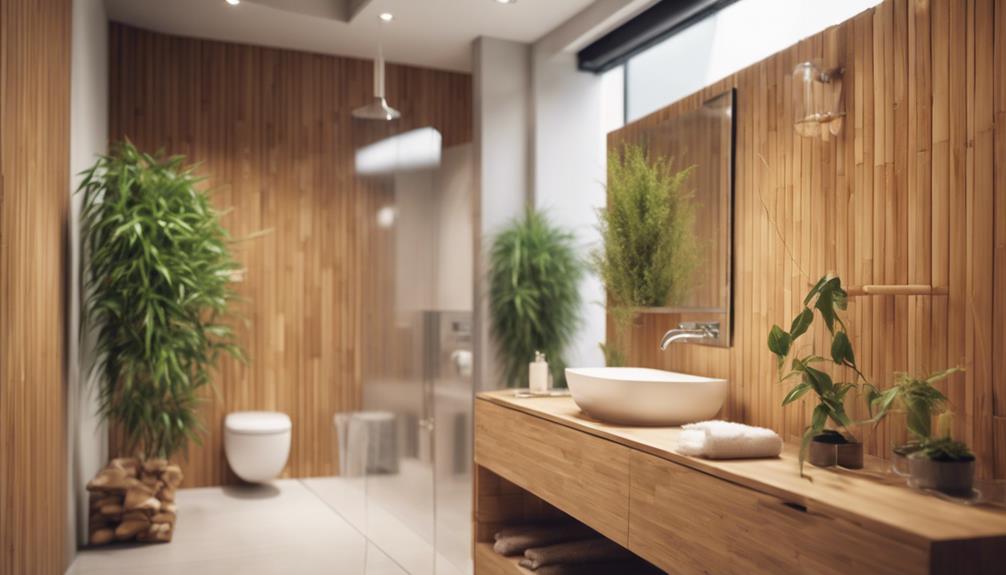
When considering eco-friendly alternatives for your bathroom remodel, bamboo flooring emerges as an excellent choice. It's not only aesthetically pleasing but also highly sustainable. Bamboo grows much faster than traditional hardwoods, reaching maturity in just three to five years. This rapid growth cycle makes it a superior renewable resource that doesn't contribute to deforestation in the same way other woods might.
You'll find that bamboo is remarkably durable. It's inherently resistant to moisture and mold, which are crucial qualities for bathroom environments. This means you'll have fewer worries about warping or damage over time, ensuring your floor remains beautiful and functional for years to come.
Installing bamboo flooring is straightforward, and you can often do it yourself with click-together planks. This DIY aspect can save you money on installation costs.
Moreover, bamboo offers versatility in style. Whether you prefer a light, airy feel or a darker, richer tone, there's a type of bamboo to suit your taste. It can be stained or left natural, complementing any decor theme you envision for your bathroom.
Recycled Glass Tiles
Recycled glass tiles are another excellent choice for your bathroom remodel, offering both eco-friendliness and unique aesthetic appeal. These tiles are crafted from post-consumer or post-industrial glass, making them a sustainable option that reduces landfill waste. You'll find they come in a variety of colors and finishes, allowing you to create a custom look that's as bold or subtle as you desire.
Using recycled glass tiles isn't just about aesthetics; it's also a practical decision. They're incredibly durable and resistant to stains, which is essential in a high-moisture environment like your bathroom. Plus, they're easy to maintain, requiring just a simple wipe down to keep them looking new.
You're not only making an environmentally sound choice but also installing a surface that reflects light beautifully, making your bathroom appear brighter and larger. Whether you opt for small mosaic tiles for a detailed backsplash or larger tiles for a streamlined look, recycled glass tiles provide a versatile design solution that complements any style.
Think about the positive impact you're making on the environment every time you step into your stunningly remodeled bathroom. Opting for recycled glass tiles means you're embracing sustainability without sacrificing style or quality.
Low-VOC Paint Solutions
Choosing low-VOC paints for your bathroom remodel is a smart way to enhance air quality while still achieving the perfect aesthetic. VOCs, or volatile organic compounds, are chemicals that evaporate at room temperature and can release harmful emissions into the air you breathe. By opting for low-VOC options, you're making a healthier choice for both your family and the environment.
These paints aren't just beneficial for air quality; they also come in a wide range of colors and finishes, allowing you to personalize your space without compromise. You might worry about performance, but rest assured, low-VOC paints have improved significantly. They offer excellent coverage, easy cleaning, and durability, even in high-moisture areas like bathrooms.
Moreover, using low-VOC paints can contribute to a more sustainable building practice. Since these products are less harmful to produce and dispose of, they decrease the overall environmental impact of your remodeling project.
When selecting your paint, check the labels for certification from reputable organizations like Green Seal or the Environmental Protection Agency's Safer Choice. These certifications ensure the products meet strict health and environmental standards, giving you peace of mind while you beautify your bathroom.
Cork Wall Coverings
Cork wall coverings offer an innovative and sustainable option for your bathroom remodeling project. Derived from the bark of the cork oak tree, this material isn't just eco-friendly; it's also naturally resistant to mold, mildew, and water—perfect for your bathroom's humid environment.
You'll find that cork is incredibly durable, providing a long-lasting solution that doesn't sacrifice style.
When you choose cork for your bathroom walls, you're opting for a material that provides excellent thermal and acoustic insulation. This means not only will your bathroom remain a quiet sanctuary, but it will also maintain a more consistent temperature. Cork's soft texture adds a unique tactile experience that enhances the comfort and warmth of your space.
Installing cork wall coverings is straightforward. It typically comes in tiles or panels, which can be glued directly onto your walls. You can leave it in its natural state, which showcases its rich, warm tones and unique texture, or you can stain or paint it to match your specific design preferences.
Moreover, cork is a renewable resource. The cork oak tree regenerates its bark naturally over time, making cork harvesting an environmentally friendly process. By choosing cork, you're not only beautifying your bathroom but also contributing to a healthier planet.
Reclaimed Wood Cabinets
While cork brings sustainability and comfort to your walls, reclaimed wood cabinets introduce a rustic charm and eco-consciousness to your bathroom storage solutions. By choosing these cabinets, you're not just adding unique style to your space; you're also making an environmentally responsible choice.
Reclaimed wood is sourced from old barns, warehouses, or even ships, and using it prevents the need for new trees to be cut down, reducing deforestation and carbon emissions.
You'll find that each piece of reclaimed wood holds its own history, evident in its distinct knots and grain patterns, which can add an authentic, vintage feel to your bathroom. This character is something you can't get from new wood, making your cabinets not only functional but also a conversation piece.
Moreover, these cabinets are sturdy and durable. The wood has already withstood the test of time, which means it's less likely to warp or split. You're investing in quality that lasts, reducing the need for future replacements.
When you opt for reclaimed wood, you're also supporting the recycling industry, which plays a crucial role in our sustainable development goals. So, you're not just renovating your bathroom; you're helping the planet too.
Natural Linoleum Flooring
Have you considered natural linoleum for your bathroom flooring? This eco-friendly option might just surprise you with its durability and style flexibility. Unlike its synthetic counterparts, natural linoleum is made from renewable materials like linseed oil, cork dust, tree resins, and jute backing. It's a fantastic choice if you're aiming for a green home renovation.
Not only is natural linoleum biodegradable, but it's also antibacterial, making it ideal for bathrooms where moisture and mold can be an issue. You'll find it's a breeze to maintain. A simple sweep and occasional mop with mild soap are all it takes to keep it looking pristine.
Plus, it comes in a variety of colors and patterns, giving you the freedom to match your aesthetic desires without compromising on environmental values.
Moreover, linoleum flooring is comfortable underfoot, an essential feature in a room where you often stand barefoot. It also has excellent sound absorbing properties, ensuring your bathroom remains a quiet, serene retreat.
Salvaged Metal Fixtures
Continuing with the theme of eco-friendly bathroom remodeling, consider incorporating salvaged metal fixtures to further enhance your space's sustainability. Salvaged metal fixtures, including faucets, shower heads, and cabinet handles, offer a unique blend of environmental benefits and aesthetic appeal.
When you choose to repurpose metal, you're not only preserving natural resources but also reducing the waste that ends up in landfills.
You might wonder where to find these treasures. Start by checking out local salvage yards, antique shops, or online marketplaces dedicated to reclaimed home goods. Often, these fixtures need a bit of polishing or a minor repair to restore their shine and functionality, but that's a small trade-off for their environmental and visual payoff.
Incorporating these elements into your bathroom not only makes a statement about your commitment to sustainability but also adds a story to your space. Each salvaged piece carries its own history, making your bathroom uniquely yours. Moreover, mixing old and new elements can create a dynamic interior that stands out from the usual cookie-cutter designs.
Frequently Asked Questions
How Can Eco-Friendly Materials Impact Indoor Air Quality?
You might not realize it, but using eco-friendly materials can greatly enhance your indoor air quality. They don't emit harmful chemicals, helping you breathe easier and keeping your home healthier.
Are Eco-Friendly Materials Generally More Expensive?
You'll find that eco-friendly materials can be more costly upfront, but they often lead to long-term savings through durability and efficiency. It's worth comparing prices and benefits to make an informed decision.
How Long Do Eco-Friendly Materials Typically Last?
You'll find that these materials usually have comparable lifespans to their traditional counterparts. They can last just as long, if not longer, depending on the quality and how well you maintain them.
Can Eco-Friendly Materials Be Used in High-Moisture Areas?
Yes, you can use materials designed to withstand high moisture in specific areas, ensuring durability and maintaining integrity even in damp conditions. Always check product specifications for moisture resistance before making your choice.
What Are Common Certifications for Eco-Friendly Bathroom Materials?
You'll find certifications like Green Seal or EcoLogo on products, ensuring they meet environmental standards. Look for FSC labels on wood, indicating it's harvested sustainably. These certifications help you choose responsibly.
Conclusion
You've explored fantastic eco-friendly materials for your bathroom remodel, from bamboo flooring to salvaged metal fixtures. By choosing options like recycled glass tiles and low-VOC paints, you're not just transforming your space; you're also protecting the planet. These sustainable choices ensure your bathroom is both beautiful and environmentally conscious. Remember, every material you select makes a difference. Embrace these green alternatives and enjoy a stylish, sustainable bathroom that aligns with your eco-friendly values.
Related articles: Unlocking Secrets: Eco-Friendly Materials for Bathroom Renovations · Why Choose Eco-Friendly Materials for Bathroom Remodeling? · 5 Sustainable Tips for Eco-Friendly Bathroom Remodeling




Leave a Reply