

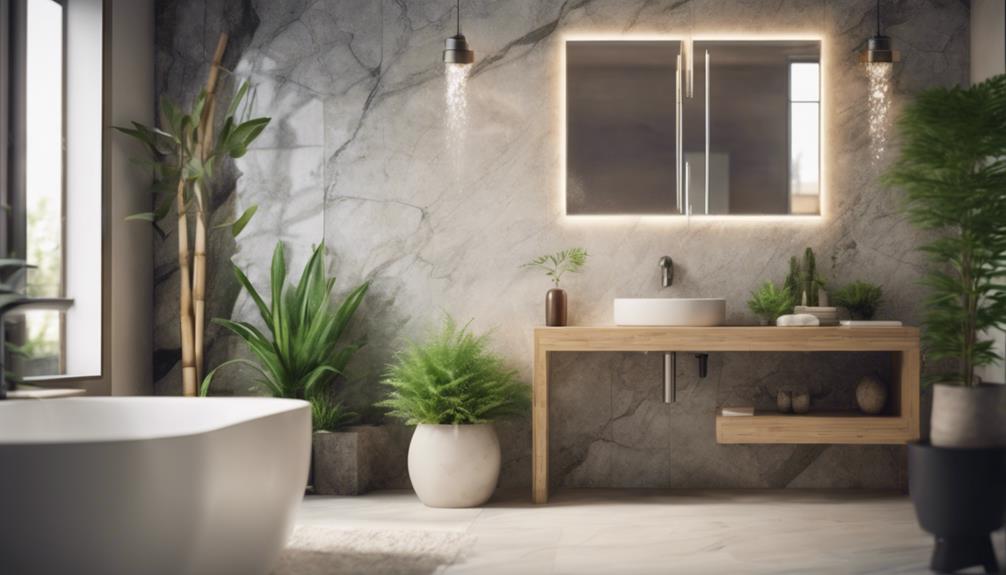
When selecting waterproof bathroom materials, you should consider durability and mold resistance. Opt for hard-wearing choices like porcelain or ceramic tiles, and ensure they are non-porous to fend off mold. Aesthetics matter too—pick textures and colors that match your bathroom's theme. Remember, installation matters; well-applied waterproof systems prevent future water damage. Also, weigh in on cost versus value; sometimes cheaper upfront means more spending later. Choose materials that are easy to maintain and check their warranties for any water damage coverage. Lastly, the right options can significantly elevate your bathroom's appeal and functionality, so it's worth taking a closer look.
Assessing Material Durability
When selecting materials for your bathroom, assessing their durability is crucial. You're looking for options that can handle daily wear and tear without showing signs of damage quickly.
Consider materials like porcelain or ceramic for your tiles. They're hard-wearing and resist chipping or cracking under stress. If you prefer natural stone, granite or slate are your best bets for longevity, though they might need a bit more upkeep to stay looking sharp.
For your fixtures, think about brass or stainless steel. They don't just look great; they're also resistant to corrosion and scratches, making them ideal for a high-moisture environment. Avoid materials that are prone to rust or deteriorate when exposed to constant humidity.
Choosing the right countertop material also matters. Quartz, for instance, is non-porous and resists staining better than most natural stones. It won't absorb water, which helps it last longer under frequent use.
Importance of Mold Resistance
Beyond durability, it's also important to consider mold resistance when choosing bathroom materials. You're not just building a space that looks good; you're creating an environment that needs to withstand humidity and moisture daily. Mold and mildew can be major issues in any bathroom due to the constant exposure to water. If the materials you choose don't resist mold, you could end up with walls, floors, or ceilings that pose health risks and are costly to repair.
Selecting materials like non-porous tiles or mold-resistant paint can drastically reduce these risks. These options don't allow moisture to penetrate, thereby minimizing the chances of mold growth.
Pay special attention to areas that are frequently wet, such as around the sink, bath, or shower. It's essential to ensure these are covered with materials that can effectively repel mold.
Evaluating Aesthetic Compatibility
While functionality is crucial, the visual appeal of your bathroom materials also plays a significant role in your overall satisfaction. When you're selecting waterproof materials, it's essential to consider how they'll mesh with your existing or planned decor. You don't want to end up with a bathroom that's all geared up against moisture but feels out of sync with your home's style.
Start by determining your bathroom's color scheme. Are you aiming for cool blues and grays, or perhaps warm earth tones? Your choice in waterproof materials should complement these colors. For instance, a serene, spa-like atmosphere can be achieved with light-colored waterproof tiles, while darker hues might suit a more modern, sleek aesthetic.
Texture is another element to consider. Various materials offer different finishes — glossy, matte, or textured. Think about what fits best with your desired bathroom vibe. A glossy finish can reflect light and enhance a small space, while matte or textured surfaces might add a more subtle, sophisticated touch.
Considering Installation Procedures
Considering the installation procedures is crucial before finalizing your choice of waterproof materials. You need to understand that not all materials are created equal when it comes to how they're installed. Some options might look great and promise high durability, but they can pose significant challenges during installation, which could affect both time and overall success.
For instance, waterproof membrane systems require precise application techniques. You'll want to ensure you're familiar with these, or hire a professional who is. If it's not installed correctly, even the best materials can fail to protect your bathroom from water damage.
On the other hand, some tile backer boards are designed for easier installation, which could save you a headache.
Also, consider the tools and additional materials needed for installation. Certain waterproof flooring options might require special adhesives or sealants. Make sure you're prepared to either acquire these tools or discuss their availability with your installer.
Lastly, think about the maintenance that will follow. Some materials might be a breeze to install but could require more upkeep down the line. Opting for materials that offer a balance between easy installation and ease of maintenance can be your best bet to ensure a seamless and durable bathroom finish.
Comparing Cost and Value
When choosing waterproof materials for your bathroom, evaluating both cost and value is essential. It's tempting to opt for the cheapest options, but remember, the initial price tag isn't the whole story. Cheaper materials might save you money upfront, but they could require replacement sooner, which means more spending in the long run.
Consider waterproof materials like ceramic tiles or high-quality vinyl. While ceramic tiles can be pricier, they often offer better durability and a timeless aesthetic appeal that can enhance your property's value.
On the other hand, vinyl is less expensive and still provides decent moisture resistance, making it a good value for budget-conscious renovations.
You should also think about the long-term benefits of each material. For instance, some materials might be more resistant to mold and mildew, reducing health risks and maintenance costs over time.
Others might've a longer warranty period, offering peace of mind and potentially saving you on repair costs.
Investing a bit more initially in the right waterproof materials can lead to significant savings and advantages. It's about finding the right balance between immediate costs and future gains, ensuring you get the best value for your investment.
Checking Maintenance Requirements
Before selecting waterproof materials for your bathroom, it's crucial to check their maintenance requirements. You'll want to ensure that you're choosing materials that don't just look great but are also easy to keep in pristine condition.
Start by examining the cleaning procedures for each material. Some options, like ceramic tiles, are straightforward to clean with just mild soap and water. Others, like certain types of stone, might require specific cleaners or treatments to prevent damage and maintain their appearance. It's important to know what you're signing up for; if you're not up for high-maintenance surfaces, steer clear of materials that need special care.
Consider the durability and resistance to common issues like mold and mildew. In a moist environment like a bathroom, these problems can surface quickly, so opting for materials that naturally resist these issues can significantly reduce your cleaning effort. Materials such as porcelain and glass tiles tend to fend off mold better than more porous options.
Lastly, think about the time you're willing to dedicate to maintenance. If you're a busy person, choosing materials that are low-maintenance can save you time and trouble. Remember, the goal is to balance aesthetics with practicality to enjoy your bathroom without extra hassle.
Understanding Warranty and Support
After assessing the maintenance requirements of various waterproof bathroom materials, it's equally important to understand the warranty and support that accompanies your purchase. You'll find that warranties can greatly differ, not just in length, but in what they cover. Make sure you're checking whether the warranty extends to water damage, wear and tear, or just manufacturing defects.
You should ask for a detailed warranty statement before making a decision. This document will clarify what's covered and for how long. Don't hesitate to ask for clarifications on any terms that aren't clear to you. Remember, a longer warranty mightn't necessarily be better if it doesn't cover the essentials.
Furthermore, consider the manufacturer's support system. Is there a reliable customer service team? How quickly do they respond to queries or complaints? Can you easily access repair services if something goes wrong? These factors are crucial because they ensure that you're not just buying a product, but also the peace of mind that comes with good customer support.
Frequently Asked Questions
Can Waterproof Materials Also Be Eco-Friendly?
Yes, you can find eco-friendly waterproof materials. They're made using sustainable processes and recyclable resources, reducing environmental impact while keeping your spaces dry and mold-free. Always check for green certifications to ensure sustainability.
Are There Waterproof Options for Heritage-Style Bathrooms?
Yes, you'll find waterproof options that suit heritage-style bathrooms. Look for vintage-inspired tiles and specialized sealants to maintain that classic look while ensuring everything stays dry and protected against water damage.
How Do Humidity Levels Affect Waterproof Bathroom Materials?
You'll find that high humidity levels can weaken waterproof bathroom materials over time, potentially leading to mold and damage. It's crucial to choose materials designed for high moisture resistance in such environments.
Do Waterproof Materials Affect Indoor Air Quality?
Yes, waterproof materials can affect your indoor air quality. They might release VOCs, which can deteriorate air quality. You should choose low-VOC materials to maintain healthier air in your home.
Is There a Season Best for Installing Waterproof Materials?
You'll find it best to install waterproof materials during dry seasons. Less humidity and rain expedite drying and setting times, ensuring a quicker, more effective installation process without weather-related delays.
Conclusion
You've got all the tips to select the perfect waterproof materials for your bathroom. Always check for durability and mold resistance to ensure longevity. Make sure the aesthetics align with your vision. Don't forget to consider the ease of installation and compare the costs against the value you're getting. Maintenance should be simple, and a good warranty can be a lifesaver. With these insights, you're now equipped to make informed choices that blend functionality and style seamlessly.
Related articles: Why Opt for Waterproof Materials in Bathroom Remodeling?




Leave a Reply