


When selecting materials for your sustainable bathroom, prioritize durability and choose options like porcelain tiles and granite countertops. You'll also reduce your environmental impact with recycled materials such as glass countertops and reclaimed wood. Ensure the products you opt for are low-emission to maintain healthier indoor air quality; look for certifications like Greenguard. Supporting local artisans not only helps the economy but also cuts down on transport emissions. Finally, invest in water-efficient fixtures like WaterSense-certified showerheads to minimize water usage. As you consider these aspects, you'll uncover further benefits and innovative ways to enhance your bathroom's sustainability.
Assess Material Lifespan
When selecting materials for your bathroom, it's crucial to consider their lifespan. You want products that don't just look great but also stand the test of time. Durable materials can withstand daily wear and tear, reducing the need for frequent replacements and thus minimizing waste.
Start by examining tiles for your floors and walls. Porcelain and ceramic are top choices due to their hardiness and moisture resistance. They're less likely to crack under pressure than other materials and maintain their appearance for years.
For countertops, granite and quartz are your best bets. Both are resilient, resisting scratches and heat damage which often occur in the hustle of bathroom activities.
Don't overlook the faucets and fixtures. Opt for stainless steel or brass, which aren't only tough but also less prone to corrosion. Cheaper alternatives might save you money upfront, but they often falter quicker, leading to extra costs and hassle over time.
Explore Recycled Options
Why not consider recycled materials for your next bathroom renovation? They're not just good for the planet; they can also add unique character and charm to your bathroom. Using recycled glass for countertops or shower tiles can give your space a distinctive look while being incredibly durable. You're not only choosing an environmentally responsible option but also opting for materials that are often more affordable than their new counterparts.
Think about recycled plastic too. It can be transformed into beautiful, eco-friendly composite materials that are perfect for surfaces like vanity tops. These composites are resistant to water and humidity, making them ideal for the bathroom environment. Plus, they come in various colors and styles, ensuring you don't sacrifice aesthetics for sustainability.
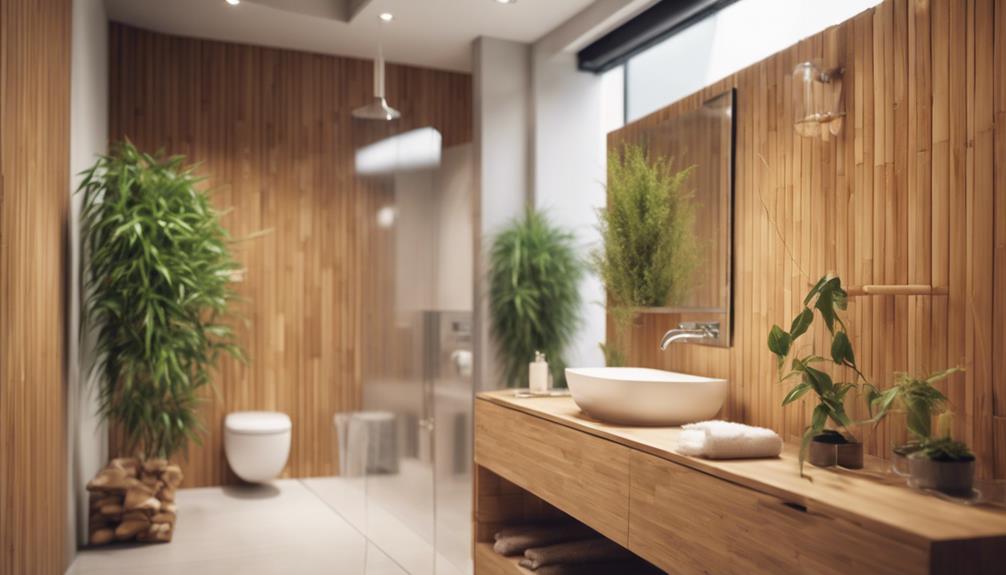
Lastly, reclaimed wood can bring warmth and a rustic appeal to your bathroom. Whether you use it for cabinetry or as an accent wall, this wood usually comes with a rich history and a strong, resilient quality. When you opt for reclaimed wood, you're not just recycling; you're preserving a piece of history and reducing the demand for new, raw materials. So, dive into the world of recycled options and make your bathroom stylishly sustainable.
Check for Low-Emission Products
As you select materials for your bathroom renovation, it's crucial to check for low-emission products. These products, often marked with certifications like Greenguard or Green Seal, ensure that the materials emit low levels of volatile organic compounds (VOCs). VOCs aren't just bad for the planet; they can harm your indoor air quality and impact your health.
Why does this matter? Materials such as paints, sealants, and adhesives can release harmful chemicals into the air long after application. Choosing low-emission alternatives means you're opting for a safer, cleaner bathroom environment. Look for products specifically labeled as low-VOC or zero-VOC. These labels are your assurance that the products meet strict chemical emission limits.
Don't just stop at surface materials. Consider the installation processes too. Some adhesive products used for tiles and flooring might emit higher VOCs compared to others. Opting for mechanical fastening methods can sometimes eliminate the need for these chemical-based products altogether.
Prioritize Local Sourcing
Moving beyond choosing low-emission products, it's also essential to prioritize local sourcing for your bathroom materials. When you opt for local products, you're not just supporting the local economy; you're also significantly reducing the carbon footprint associated with long-distance transportation. Think about the journey that materials must undertake to reach you. The farther they travel, the greater the environmental impact due to fuel consumption and emissions from transportation vehicles.
By choosing local suppliers, you can more easily verify the sustainability practices and origins of your materials. This transparency allows you to ensure that the products meet your standards for sustainability and ethical production.
You'll often find that local artisans take immense pride in their work, using techniques and materials that have a lower environmental impact compared to mass-produced items.
Moreover, local sourcing often leads to unique, high-quality materials that can add character and distinction to your bathroom. These materials mightn't only be eco-friendly but also better suited to your specific climate and building needs, enhancing durability and functionality.
Evaluate Water Efficiency
When choosing materials for your bathroom renovation, you must also consider water efficiency. This isn't just about saving water; it's about reducing your environmental footprint and cutting down on utility bills. Start by selecting low-flow fixtures such as toilets, showerheads, and faucets. These are designed to use significantly less water than standard models without sacrificing performance.
It's crucial to check the product labels for WaterSense certification. This EPA program certifies products that are at least 20% more efficient than their counterparts without any loss in effectiveness. You'll find that opting for these can make a big difference in your water conservation efforts.
Don't forget to address leaks. Even the smallest drip can waste gallons of water over time. Use durable materials and proper installation techniques to ensure everything is sealed and secure. If you're unsure, it's worth hiring a professional who can guarantee efficient installation.
Lastly, consider investing in a greywater system. This system recycles water from sinks and showers for use in toilet flushing or garden watering, further maximizing your water efficiency. By integrating these strategies, you'll not only contribute to the planet's health but also enjoy significant savings in the long run.
Frequently Asked Questions
How Do Sustainable Materials Impact Overall Bathroom Maintenance Costs?
You'll find that sustainable materials often reduce bathroom maintenance costs due to their durability and efficiency. They're built to last, cutting down on frequent replacements and saving you money in the long run.
Can Sustainable Materials Affect Bathroom Acoustics?
Yes, sustainable materials can affect bathroom acoustics. They often absorb sound better than traditional materials, reducing echoes and noise. You'll notice a quieter, more serene environment, enhancing your bathroom's overall ambiance.
Are There Color Limitations With Sustainable Bathroom Materials?
You won't find as many color options with sustainable materials, but they're still diverse enough to match your style. Companies often focus on natural hues, which can beautifully complement your bathroom design.
How Do I Verify the Authenticity of Sustainable Material Claims?
To verify the authenticity of sustainable material claims, you should check for certifications like FSC or Energy Star. Also, research the company's sustainability reports and reviews to ensure they're transparent about their practices.
What Are Innovative Sustainable Materials Emerging in the Market?
You'll find bamboo, recycled glass, and reclaimed wood are gaining popularity. These materials offer durability and unique aesthetics while ensuring your projects align with environmentally friendly practices. Keep an eye on local innovations too!
Conclusion
You've got the power to make your bathroom eco-friendly! Start by choosing materials with a long lifespan and consider those made from recycled content. Always opt for products with low emissions to keep your indoor air quality fresh. Don't forget to support local businesses by sourcing materials nearby, and prioritize fixtures that enhance water efficiency. By following these tips, you'll create a sustainable bathroom that's good for both the planet and your peace of mind.
Related articles: Eco-Friendly Materials Guide for Bathroom Remodeling




Leave a Reply