


For an eco-friendly bathroom remodel, you should consider materials like cork or bamboo for flooring, which are renewable and water-resistant. Recycled glass tiles make vibrant, sustainable choices for both flooring and walls, reducing landfill waste. Opt for recycled glass countertops and bamboo cabinets, which are durable and stylish while also being kind to the planet. Don't forget to install low-flow toilets and showerheads to conserve water effectively. Also, LED lighting and low-VOC paints will enhance your bathroom's environmental friendliness without compromising on quality or style. There's much more you can implement that benefits both your home and the environment.
Sustainable Flooring Options
When remodeling your bathroom, opting for sustainable flooring is a smart choice. You're not only supporting environmentally friendly practices but also selecting materials that are often more durable and aesthetically pleasing. Let's explore some top options that'll ensure your bathroom is both stylish and sustainable.
Cork is a fantastic choice. It's harvested from the bark of cork oak trees without harming the tree itself, which allows it to regrow and be reharvested every nine years. Cork is naturally resistant to mold, mildew, and water, making it ideal for bathroom environments. Plus, it feels warm and soft underfoot, a pleasant bonus during those colder mornings.
Bamboo flooring is another excellent option. It's one of the fastest-growing plants, making it a highly renewable resource. Bamboo floors are known for their strength and durability, comparable to traditional hardwood floors. They come in various styles and finishes, allowing you to customize the look to your taste.
Lastly, consider recycled glass tiles. Not only do they offer a unique, colorful flair, but they're also incredibly resistant to moisture and easy to maintain. By choosing these tiles, you're recycling materials that would otherwise end up in landfills, making a significant environmental impact.
Eco-Friendly Wall Materials
Shifting your focus to the walls, consider eco-friendly materials that not only enhance your bathroom's aesthetics but also promote environmental sustainability.
One excellent choice is recycled glass tiles. These tiles are made from recovered glass waste, reducing landfill use and requiring less energy than traditional ceramic tiles. They come in a variety of colors and finishes, allowing you to customize your space while being kind to the planet.
Another innovative option is reclaimed wood. Using reclaimed wood gives a second life to existing materials, avoiding the environmental impact associated with new timber harvesting. It adds warmth and character to your bathroom walls and can be sealed to resist moisture damage effectively.
You might also look into natural lime plaster. This material is made from natural lime and sand, making it highly sustainable. It's not only beautiful and subtle in texture but also mold-resistant, which is perfect for the high humidity of a bathroom. Lime plaster absorbs carbon dioxide as it cures, further reducing its environmental footprint.
Low-Flow Water Fixtures
Turning to water usage, you'll find that installing low-flow water fixtures is a smart move for any eco-friendly bathroom remodel. These fixtures, which include toilets, showerheads, and faucets, are designed to use significantly less water than standard models. By opting for these, you're not only cutting down on your water consumption, but you're also reducing your water bill.
Low-flow toilets, for example, use just 1.28 gallons per flush, compared to older models that can use up to 3.5 gallons. Similarly, low-flow showerheads can reduce water usage to 2 gallons per minute or less, without sacrificing water pressure. This means you can still enjoy a powerful shower while being kind to the planet.
Installing these fixtures is straightforward and can be done without major renovations. Many brands offer a variety of styles and finishes, ensuring that you don't have to compromise on aesthetics for functionality.
Recycled Glass Countertops
After considering the water efficiency of your bathroom with low-flow fixtures, another innovative material choice for your remodel is recycled glass countertops. These countertops aren't just stylish; they're a testament to sustainability. Made from repurposed glass materials, such as discarded bottles and jars, they prevent excess waste from ending up in landfills.
You'll love how they look in your space. Recycled glass countertops come in a myriad of colors and patterns, offering a unique aesthetic unlike any other surface. Each piece contributes to a mosaic of intricate details, ensuring that no two countertops are exactly alike. This means you'll have a one-of-a-kind design element in your bathroom that also reflects your commitment to the environment.
Besides their visual appeal, these countertops are incredibly durable and easy to maintain. They resist stains, scratches, and heat, making them a practical choice for a frequently used area like the bathroom. Cleaning them is a breeze—just a quick wipe with a mild soap and water, and they're as good as new.
Choosing recycled glass countertops helps you reduce your carbon footprint while giving your bathroom a modern, eco-friendly update. Isn't it wonderful to support the planet while also enhancing your home's aesthetics?
Bamboo Cabinets and Vanities
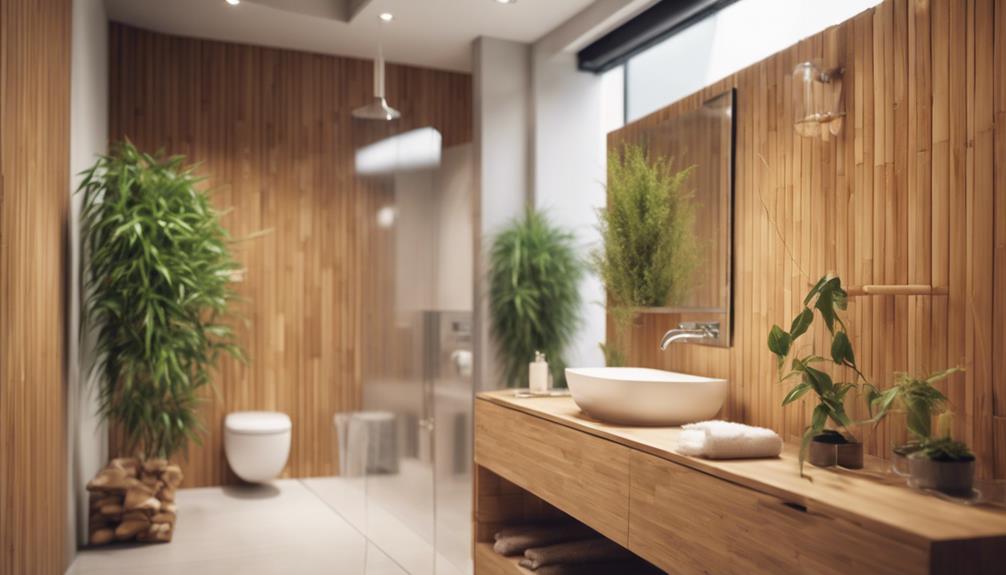
Bamboo cabinets and vanities offer a superb option for your eco-friendly bathroom remodel. Known for its rapid growth and sustainability, bamboo is an ideal material choice when you're looking to minimize environmental impact. Unlike traditional woods that can take decades to mature, bamboo reaches harvest maturity in just about five years, ensuring a renewable resource that doesn't contribute to deforestation.
What's more, bamboo boasts a natural resistance to moisture and pests, making it perfect for the humid environment of your bathroom. You won't have to worry about warping or damage as you might with other wood products.
This durability also means your bamboo cabinets and vanities will stand the test of time, reducing the need for frequent replacements and further conserving environmental resources.
Choosing bamboo not only helps the planet but also adds a touch of modern elegance to your space. Its unique grain and warm tones can complement any design aesthetic, from minimalist to rustic. Plus, it's easy to maintain with just a simple wipe-down using a damp cloth, ensuring you spend less time on upkeep and more on enjoying your eco-friendly retreat.
Non-Toxic Paint Selections
When selecting paints for your eco-friendly bathroom remodel, opt for non-toxic options to ensure healthier indoor air quality. Traditional paints often contain volatile organic compounds (VOCs) that can release harmful chemicals into the air, affecting your health and the environment. Instead, go for paints labeled as low-VOC or zero-VOC. These products minimize your exposure to harmful chemicals, making your bathroom a safer space.
You should also consider the base of the paint. Water-based paints are generally more eco-friendly than oil-based alternatives, as they emit fewer pollutants and are easier to clean up, reducing the need for harmful chemicals.
Moreover, some manufacturers go a step further by incorporating natural ingredients like clay, chalk, and even milk proteins, which offer a sustainable approach without compromising quality.
Energy Efficient Lighting
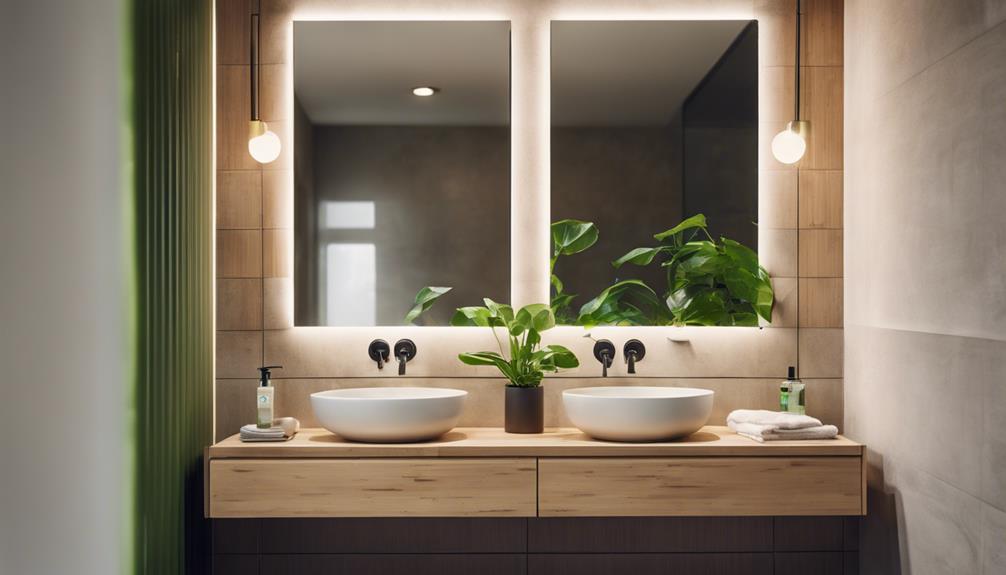
Now that you've selected non-toxic paints for your eco-friendly bathroom remodel, consider upgrading to energy-efficient lighting to further enhance your space's sustainability. Switching to LED bulbs is a smart move. They use at least 75% less energy and last 25 times longer than traditional incandescent bulbs. This means you won't just cut down on your electricity bills, but you'll also reduce the frequency of replacements.
Consider also the design of your light fixtures. Opt for models that complement natural light, reducing the need for artificial lighting during the day. Skylights and larger windows can be strategic additions that help achieve this effect, though they should be planned to maintain privacy.
Don't overlook the importance of lighting controls. Installing dimmers, timers, or motion sensors in your bathroom allows you to use light only when necessary, minimizing waste. This technology isn't only practical but also extends the life of your bulbs, as they aren't constantly running at full capacity.
Water-Saving Toilets and Showers
Why stop at lighting when you can also conserve significant amounts of water in your bathroom remodel? Installing water-saving toilets and showers is a smart move. You'll not only reduce your water consumption but also cut down on your utility bills.
First, consider a high-efficiency toilet. These toilets use less than 1.28 gallons per flush, compared to older models that might use up to 3.5 gallons. That's a huge saving with every flush. Look for models with the WaterSense label, ensuring they meet EPA criteria for efficiency and performance.
Next, let's talk about showers. Low-flow showerheads are a game changer. They can reduce water usage to about 2 gallons per minute or even less, without sacrificing water pressure. Many come with adjustable settings, so you don't have to compromise on comfort.
Don't overlook installation and maintenance. Ensure proper installation to prevent leaks, which can undermine your conservation efforts. Regularly check your fixtures and address any leaks promptly.
Frequently Asked Questions
How Long Does an Eco-Friendly Bathroom Remodel Typically Take?
An eco-friendly bathroom remodel typically takes between 4 to 8 weeks, depending on the scope and materials used. You'll need to factor in planning, sourcing sustainable materials, and potential customizations.
Are Eco-Friendly Materials More Expensive Than Traditional Materials?
You'll find that eco-friendly materials can often be pricier than traditional options initially. However, they usually offer long-term savings through durability and energy efficiency, balancing the upfront cost over time.
Can I DIY My Eco-Friendly Bathroom Remodel?
You can DIY your bathroom remodel to be eco-friendly. Research sustainable materials and techniques. Plan carefully to ensure you're using resources efficiently. It's a great way to save money and protect the environment.
What Is the ROI of an Eco-Friendly Bathroom Remodel?
You'll find that the ROI of an eco-friendly bathroom remodel depends largely on energy and water savings. Upfront costs are higher, but long-term savings and increased home value can make it worthwhile.
How Do I Dispose of Old Bathroom Materials Sustainably?
To dispose of old bathroom materials sustainably, you'll need to separate recyclables and consider donating usable items. Contact local waste management for guidelines on recycling or disposal of non-recyclable materials responsibly.
Conclusion
As you plan your bathroom remodel, choosing sustainable materials can significantly impact the environment. Opt for eco-friendly flooring, recycled glass countertops, and bamboo cabinets to reduce your ecological footprint. Don't forget to install low-flow fixtures and water-saving toilets to conserve precious resources. By selecting non-toxic paints and energy-efficient lighting, you'll create a healthier space that's both beautiful and kind to the planet. Remember, every choice you make counts toward a greener future.
Related articles: 3 Top Eco-Friendly Materials for Bathroom Remodels · Eco-Friendly Materials Guide for Bathroom Remodeling · Green Choices for Your Bathroom Remodel




Leave a Reply