

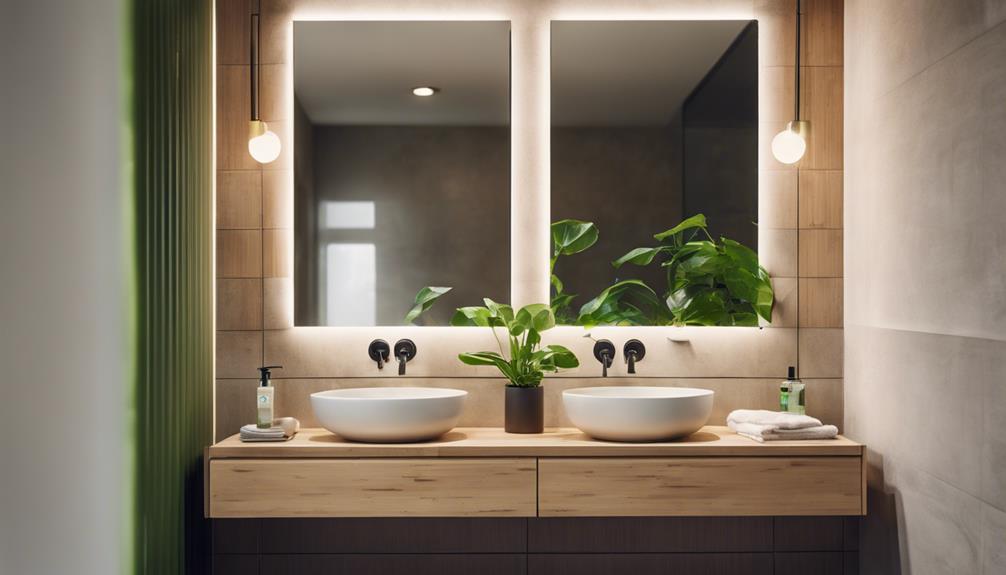
To meet green building standards in your bathroom, start by installing WaterSense-labeled toilets and water-saving showerheads to significantly cut down your water usage. Opt for sustainable materials like recycled glass tiles or bamboo flooring to minimize environmental impact. Implement energy-efficient lighting with LED bulbs and consider adding motion sensor lights to further reduce energy consumption. Enhance air quality using low-VOC paints and ensure proper ventilation with an efficient exhaust fan. You could also explore incorporating a greywater recycling system to reuse water efficiently. These initial steps create a more sustainable bathroom environment, and there's much more to explore as you further embrace eco-friendly innovations.
Selecting Water-Efficient Fixtures
When designing a bathroom that meets green building standards, selecting water-efficient fixtures is crucial. You'll not only conserve water but also reduce your utility bills and impact on the environment.
Start with the toilet, which accounts for nearly 30% of residential indoor water consumption. Opt for models that have the WaterSense label, ensuring they use no more than 1.28 gallons per flush—a significant saving compared to older models that might use as much as 6 gallons.
Next, consider your showerhead choice. Water-efficient showerheads can drastically cut water usage, from the standard 2.5 gallons per minute to a more efficient 2.0 gallons or less without sacrificing performance. Look for ones that also carry the WaterSense label.
Don't overlook the faucets. Aerators—small devices that screw onto the tip of faucet nozzles—can be a simple upgrade that maintains water pressure while reducing flow. This means you'll use less water each time you wash your hands or brush your teeth.
Utilizing Sustainable Materials
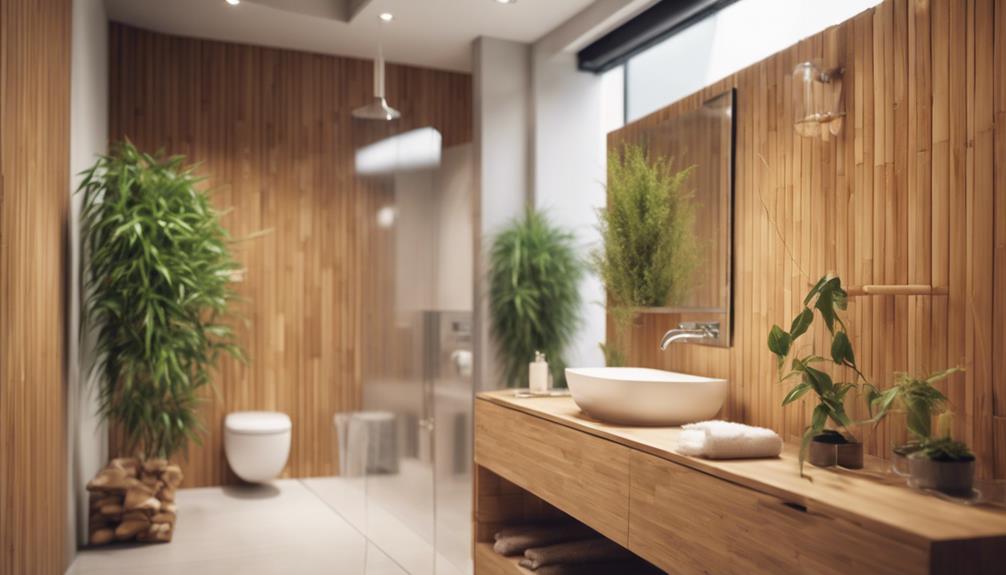
Exploring sustainable materials for your bathroom not only supports environmental sustainability but also offers long-lasting quality and aesthetic appeal. When you're looking to remodel, consider materials like recycled glass tiles, bamboo flooring, or reclaimed wood. These alternatives aren't just eco-friendly; they bring a unique, natural aesthetic you can't find with conventional materials.
Recycled glass tiles, for instance, provide a vibrant or subtle backdrop depending on your taste, without depleting natural resources. Bamboo, a rapidly renewable resource, offers durability and resistance to moisture and mold, making it ideal for bathroom flooring. Reclaimed wood, salvaged from old buildings or ships, adds a touch of history and character to your space. Each piece tells a story, and it's a great conversation starter.
You should also think about the countertops. Composite surfaces made from recycled quartz and resin are incredibly sturdy and come in various colors and patterns. These materials often mimic the look of natural stone but are more sustainable and often more affordable.
Implementing Energy-Efficient Lighting
Switching to energy-efficient lighting in your bathroom not only cuts down on your energy bills but also enhances the overall ambiance of the space. By opting for LED lights, you're choosing fixtures that use at least 75% less energy and last 25 times longer than traditional incandescent lighting. This means you're not just saving money, you're also reducing the frequency of replacements.
Consider installing dimmer switches to further maximize energy savings. These allow you to adjust the light intensity based on your needs and time of day, which can significantly decrease energy usage. Occupancy sensors add another layer of efficiency by ensuring lights are only on when the room is in use. This is especially beneficial if you tend to forget to turn off the lights.
When selecting your lighting fixtures, look for those with the ENERGY STAR label to ensure they meet strict energy efficiency guidelines set by the U.S. Environmental Protection Agency. This certification guarantees that the product contributes to significant energy savings nationwide.
Lastly, align your lighting choices with your overall bathroom design. Energy-efficient lighting doesn't mean sacrificing style. Today's market offers a wide range of stylish options that can complement any décor while fulfilling green building standards.
Enhancing Indoor Air Quality
After focusing on energy-efficient lighting, another key aspect of meeting green building standards in bathrooms involves enhancing indoor air quality. You'll need to consider several strategies to ensure the air remains fresh and healthy.
Firstly, proper ventilation is crucial. It's not just about installing a fan; you've got to make sure it's adequately sized for your bathroom's volume and usage. An energy-efficient exhaust fan that runs quietly and continuously can significantly reduce humidity and airborne pollutants, both of which are prevalent in bathrooms.
Secondly, choosing materials that emit low or no volatile organic compounds (VOCs) is essential. Opt for paints, sealants, and adhesives that maintain the air quality, rather than compromise it. These products are readily labeled and rated for their VOC emissions, so you can make informed choices.
Additionally, integrating live plants can be more than just aesthetically pleasing; they're natural air purifiers. Plants like spider plants, peace lilies, and bamboo palms don't just occupy space; they absorb CO2 and emit oxygen, improving the overall air quality.
Incorporating Water Recycling Systems
Shifting your focus to water efficiency, incorporating water recycling systems in bathrooms is a vital step towards sustainable building practices. You're not just saving water; you're significantly reducing your building's overall environmental impact. By installing systems that recycle greywater from sinks, showers, and baths, you can reuse it for toilet flushing and landscape irrigation.
This approach isn't just eco-friendly; it's cost-effective in the long run. You'll see a decrease in water bills as you're essentially cutting the demand for fresh water. Plus, it's a real selling point for environmentally conscious buyers if you're in the market to sell.
To get started, you'll need to choose a system that fits your specific needs. Compact, biological systems are great for smaller spaces, while larger mechanical systems might be required for bigger projects.
You'll also need to work with a professional to ensure proper installation and compliance with local health and safety regulations.
Applying Low-VOC Products
While focusing on water recycling significantly boosts your bathroom's sustainability, another important step is to apply Low-VOC products. VOCs, or volatile organic compounds, are emitted as gases from certain solids or liquids and can have short- and long-term adverse health effects. By choosing Low-VOC paints, sealants, and adhesives, you're not only protecting your health but also enhancing the air quality of your bathroom.
When shopping for these products, look for labels that indicate Low-VOC or Zero-VOC content. These items typically contain fewer than 50 grams per liter of VOCs, making them a safer choice for indoor environments. Don't forget to check the certifications as well; products certified by reputable organizations like Green Seal or the GREENGUARD Environmental Institute meet stringent emissions standards.
Applying these products is quite straightforward. You'll use them just as you'd their high-VOC counterparts, but you'll notice less odor and faster air quality improvement post-application. Remember, maintaining good ventilation during the application and curing process helps minimize any VOCs that are present.
Implementing Smart Technology Controls
As you explore ways to enhance your bathroom's sustainability, consider implementing smart technology controls. These systems allow you to manage water heating, lighting, and even ventilation with remarkable precision, ensuring that energy consumption is kept to a minimum.
Smart thermostats can adjust the temperature automatically based on your schedule and preferences, reducing heating costs and energy use. Imagine stepping into a comfortably warm bathroom each morning, knowing you're saving energy without lifting a finger.
Similarly, smart lighting systems equipped with motion sensors ensure lights are only on when needed. This not only cuts down on your electricity bill but also extends the life of your bulbs.
Water conservation is another critical feature of smart bathrooms. Faucets with smart technology can regulate water flow based on usage, significantly reducing wastage. Even more, advanced systems monitor water usage and detect leaks, alerting you via your smartphone so you can act quickly.
Frequently Asked Questions
How Do Green Certifications Impact Property Value?
Green certifications boost your property's value by showcasing sustainability and efficiency. Buyers often pay more for eco-friendly homes, increasing your investment's worth. It's a smart move in today's environmentally conscious market.
Are There Grants Available for Green Bathroom Renovations?
Yes, you can find grants for green bathroom renovations from government and private sources. They'll help cover costs to ensure your project meets sustainability standards, reducing both environmental impact and future utility bills.
What Is the Typical ROI for Green Bathroom Upgrades?
You'll find that the typical ROI for green bathroom upgrades varies. Generally, you can expect a return of about 70-100%, depending on factors like the quality of materials and overall home value.
How Do Green Bathrooms Affect Building Insurance Rates?
Green bathrooms can lower your building insurance rates by reducing risk associated with water damage and increasing sustainability. You'll likely see decreased premiums due to the improved safety and efficiency standards.
Can Green Bathroom Features Improve Occupant Health?
Yes, incorporating green bathroom features can enhance your health. They reduce mold, improve air quality, and limit exposure to toxic chemicals, making your home environment safer and contributing to overall well-being.
Conclusion
You've taken great strides by selecting water-efficient fixtures and sustainable materials for your bathroom. By implementing energy-efficient lighting and enhancing indoor air quality, you're not only meeting green standards but also promoting a healthier environment. Don't forget to incorporate water recycling systems and apply low-VOC products to further reduce your ecological footprint. Embracing smart technology controls will streamline these efforts, ensuring your bathroom is not only eco-friendly but also innovative. Keep pushing the boundaries of sustainability!
Related articles: What Are Green Building Standards for Bathrooms?




Leave a Reply