


When planning your bathroom remodel, consider incorporating water-saving innovations to cut down on your water usage. You can install low-flow showerheads that maintain strong water pressure while saving thousands of gallons annually, or opt for dual-flush toilets that reduce water per flush by up to 67%. Adding faucet aerators can slash your faucet's water use in half, and water-saving bathtubs offer a reduced footprint without sacrificing comfort. Implementing technologies like smart water meters and greywater recycling systems not only minimizes water waste but also lowers your bills. With these changes, you'll create a bathroom that's both luxurious and environmentally conscious, revealing new dimensions of sustainability in your home.
Low-Flow Shower Heads
Switching to low-flow shower heads can drastically reduce your water consumption. These innovative fixtures are designed to use significantly less water than traditional models, often saving thousands of gallons per year. You'll not only conserve water but also cut down on your utility bills.
Low-flow shower heads work by limiting the flow rate to around 2.0 gallons per minute (gpm) or even less, compared to standard shower heads that typically use about 2.5 gpm. This reduction doesn't mean you'll have to sacrifice water pressure. Advanced technology allows these shower heads to maintain a strong, satisfying spray by mixing air with water or by controlling the size and speed of water droplets.
You'll find a variety of styles and features available, from handheld models to rain showers, all equipped with water efficiency in mind. Installation is straightforward and can be a DIY project that won't take more than a few minutes. Once installed, the savings begin immediately.
Dual-Flush Toilets
After updating your shower heads to conserve water, consider installing a dual-flush toilet to further enhance your bathroom's efficiency.
Dual-flush toilets offer a key advantage: they provide two flushing options. One button expels less water for liquid waste, and another uses more water for solids. This system can significantly cut down your household's water usage.
You'll find that dual-flush toilets can save you up to 67% of water used per flush compared to older, traditional models. That's not just good for the environment; it's also easy on your wallet. Over time, the savings on your water bill can really add up, making the initial investment in a dual-flush toilet a smart financial decision.
Installing one is straightforward if you're handy, or a quick job for a plumber. You might worry about the cost, but there are plenty of affordable options available that don't sacrifice quality or performance. Plus, many local governments offer rebates for homeowners who choose to install water-efficient fixtures, which could further offset your costs.
Faucet Aerators
Installing faucet aerators is one of the simplest and most effective ways to reduce your water consumption. These small devices fit on the tip of your faucets to mix air into the water stream, maintaining a high-pressure flow while using less water.
You'll notice that with an aerator, the water feels just as powerful as before, if not more so, but you're actually using up to 50% less water.
You can install them yourself in just a few minutes. Start by unscrewing the tip of your faucet, screw in the aerator and you're set. It's an affordable update that makes a big difference in your water bill. Aerators typically cost just a few dollars each and are widely available at hardware stores.
Moreover, they not only help you save water but also reduce the energy cost of heating it. By using less hot water, you're also cutting down on the energy needed to warm that water, which means additional savings on your utility bills. Plus, they reduce water splashing, which keeps your bathroom cleaner and drier.
Consider this smart, simple upgrade as a must-do in your bathroom remodel for immediate savings and environmental benefits.
Water-Saving Bathtubs
Many modern bathtubs are designed to save water without sacrificing comfort or style. Manufacturers have innovated designs that feature reduced capacity basins, strategically contoured to support full-body soaking while using less water. You'll discover that these tubs can hold your entire body comfortably with significantly less water compared to traditional models.
Moreover, some water-saving bathtubs come equipped with aerating jets that enhance your bathing experience by creating a more intense flow of bubbles using less water. This not only conserves water but also provides the luxurious feel of a high-end spa. You can enjoy a relaxing soak without the guilt of excessive water usage.
Additionally, consider bathtubs with integrated recirculation systems. These systems filter and reheat water during your bath, maintaining a constant temperature without the need for additional hot water. It's a smart choice that can reduce water and energy consumption dramatically.
Lastly, don't overlook the simple addition of a bathwater diverter. This handy device allows you to reroute used bathwater for other purposes such as gardening or cleaning, further extending the usefulness of every gallon.
Eco-Friendly Bathroom Materials
While considering water-saving features in your bathroom, it's equally important to focus on the materials used. You can significantly reduce your environmental impact by choosing sustainable materials that don't just look good but also benefit the planet.
Start by selecting recycled glass tiles for your flooring or backsplash. These tiles are made from reclaimed glass, reducing landfill waste and requiring less energy to produce than new glass. They're available in a variety of colors and patterns, so you're sure to find something that fits your style.
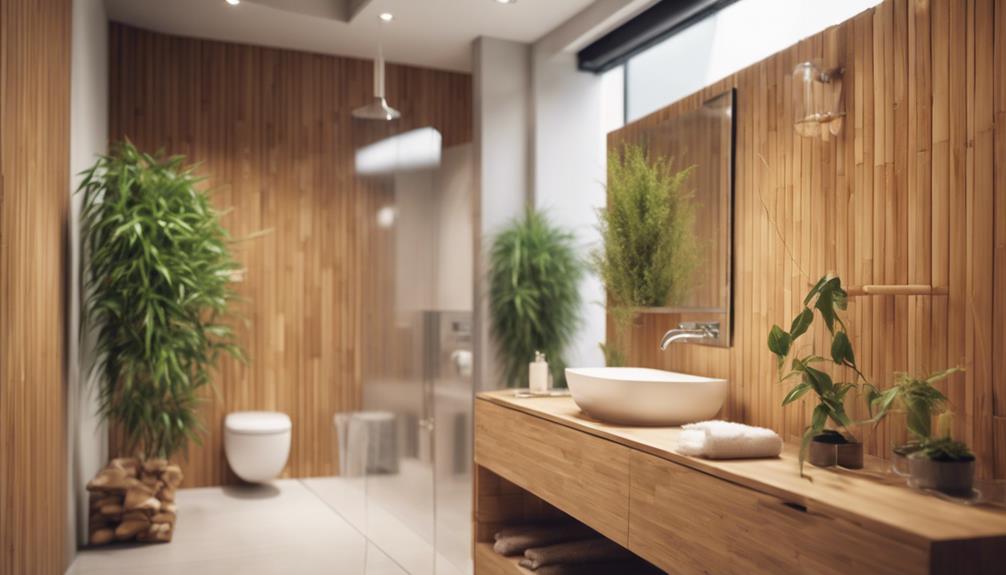
Consider bamboo for your cabinetry. Bamboo is a highly sustainable choice as it grows quickly, absorbs carbon dioxide at a higher rate than many trees, and doesn't require replanting after harvesting. It's also naturally water-resistant, making it ideal for bathroom environments.
For countertops, recycled quartz is a stellar option. It combines waste stone with resin to create a durable, non-porous surface that's easy to maintain and resistant to mold and bacteria.
Lastly, don't overlook the paint on your walls. Opt for low or zero-VOC (volatile organic compounds) paints. These products minimize air pollution indoors and out, ensuring that your bathroom remodel is as green as it's beautiful.
Smart Water Meters
Beyond eco-friendly materials, integrating smart water meters into your bathroom remodel can significantly enhance water efficiency. These devices measure your water usage in real-time, sending the data directly to your smartphone or tablet. You'll see exactly how much water you're using—and wasting—enabling you to make informed decisions and cut down on excess.
Smart water meters aren't just about monitoring; they're proactive management tools. They can alert you to leaks that you mightn't even know exist. Imagine catching a hidden leak early, saving water and preventing potential damage to your home. This immediate feedback can be critical in maintaining an efficient household and can help you tweak your daily water habits effectively.
Additionally, installing a smart water meter is a step toward smarter financial management. By understanding your water usage patterns, you can adjust your consumption to take advantage of lower rate periods, if your water utility offers variable pricing. Over time, the savings on your water bill can be substantial.
This is a practical upgrade that not only contributes to your home's sustainability but also to your budget. So, consider a smart water meter—an investment in both the planet and your pocket.
Recycled Water Systems
Recycled water systems offer a transformative approach to water conservation in your bathroom remodel. These setups, also known as greywater systems, let you reuse water from showers, baths, and sinks for other purposes like flushing toilets or watering gardens. It's a smart way to reduce your water footprint and can significantly cut down on your household water usage.
Imagine how much water you could save if you weren't using fresh, potable water for every flush of the toilet. With a recycled water system, you're repurposing water that would otherwise go straight to the sewer. It's not just about saving on your utility bills—it's about making a sustainable choice that benefits the environment.
Installing such a system might sound complex, but it's quite doable. You'll need a dual plumbing system: one for potable water and another for recycled water. Don't worry; many systems come with user-friendly interfaces and maintenance isn't as daunting as you might think.
You'll need to ensure that the water is adequately treated and disinfected for safe reuse, adhering to local regulations and health standards.
Leak Detection Devices
Consider installing leak detection devices as part of your bathroom remodel to further enhance water conservation. These innovative gadgets are essential for monitoring your plumbing system, quickly identifying any leaks, and preventing water waste.
They work by sensing moisture where it shouldn't be or detecting an unusual flow in the pipes, alerting you before the issue escalates into a costly problem.
Most leak detectors are easy to install and can be integrated with home automation systems, allowing you to monitor your bathroom's plumbing from your smartphone or tablet. This means you'll be able to address leaks immediately, even when you're not at home.
By taking immediate action, you're not only saving water but also protecting your home from potential water damage, which can be extensive and expensive to repair.
Adding these devices to your bathroom provides peace of mind, knowing that you're doing your part in conserving water and maintaining an efficient home. They're a smart investment, helping to reduce your water bill and contribute to environmental sustainability.
Don't overlook this simple addition that can make a significant difference in your water usage and overall bathroom functionality.
Sustainable Plumbing Choices
When remodeling your bathroom, opting for sustainable plumbing fixtures is a straightforward way to reduce your environmental impact.
You'll find that choosing low-flow toilets, faucets, and showerheads can make a significant difference in water usage without sacrificing performance. These fixtures use advanced technology to provide the same utility while using less water, which not only lowers your water bill but also conserves a precious resource.
Consider also the materials of the fixtures. Eco-friendly materials like recycled glass, reclaimed wood, or bamboo offer durability and a unique aesthetic while being kinder to the planet.
Additionally, selecting pipes that are made from copper or cross-linked polyethylene (PEX) can be a wise choice. These materials aren't only long-lasting but are also recyclable, reducing the need for new raw materials.
Greywater Recycling Systems
Often overlooked, greywater recycling systems are an effective way to further your commitment to water conservation during a bathroom remodel. These systems capture water from your shower, bathtub, and sinks, then reuse it for tasks like flushing toilets or irrigating your garden. By implementing this system, you're not only saving on your water bill but also minimizing your environmental footprint.
You might wonder how safe and clean this reused water is. Greywater systems filter and treat the water to ensure it's appropriate for non-potable uses. Don't worry; you're not using it for drinking or cooking! Instead, it's perfect for keeping your toilet running or your plants hydrated without tapping into fresh water resources.
Installing a greywater system can be straightforward, especially if you're already remodeling your bathroom. You'll need to integrate plumbing adjustments and perhaps add a filtration unit. It's wise to consult with a professional who specializes in eco-friendly home solutions to get the most efficient system tailored to your needs.
Frequently Asked Questions
How Do Water-Saving Features Impact Home Resale Values?
You'll find that installing water-saving features can significantly boost your home's resale value. Buyers appreciate the cost savings and environmental benefits, making your property more attractive and competitive in the market.
Are There Tax Incentives for Installing Water-Efficient Fixtures?
Yes, you can find tax incentives for installing water-efficient fixtures. Check your local government's website or the IRS for specific programs that offer credits or deductions for such environmentally friendly home improvements.
What Is the Average Cost of a Water-Saving Bathroom Remodel?
You'll find that the average cost of a bathroom remodel focusing on water efficiency typically ranges between $10,000 and $30,000, depending on the fixtures and technologies you choose to install.
How Long Does a Typical Water-Saving Renovation Take?
Typically, your renovation could take anywhere from a few weeks to a few months, depending on the complexity and scale of the changes you're planning to implement in your bathroom.
Can Existing Bathrooms Be Retrofitted With Water-Saving Technology?
Yes, you can retrofit your existing bathroom with water-saving technology. Options like low-flow showerheads, dual-flush toilets, and faucet aerators are available to help you conserve water and potentially lower your utility bills.
Conclusion
As you plan your bathroom remodel, consider these water-saving innovations. From installing low-flow shower heads to setting up greywater recycling systems, each choice you make can significantly reduce your water usage. Opt for dual-flush toilets and faucet aerators to further your conservation efforts. Embrace these eco-friendly solutions not only to save on utility bills but also to make a positive impact on the environment. Start your green journey today and transform your bathroom into a sustainable sanctuary.
Related articles: Why Prioritize Green Standards in Bathroom Remodeling?




Leave a Reply