

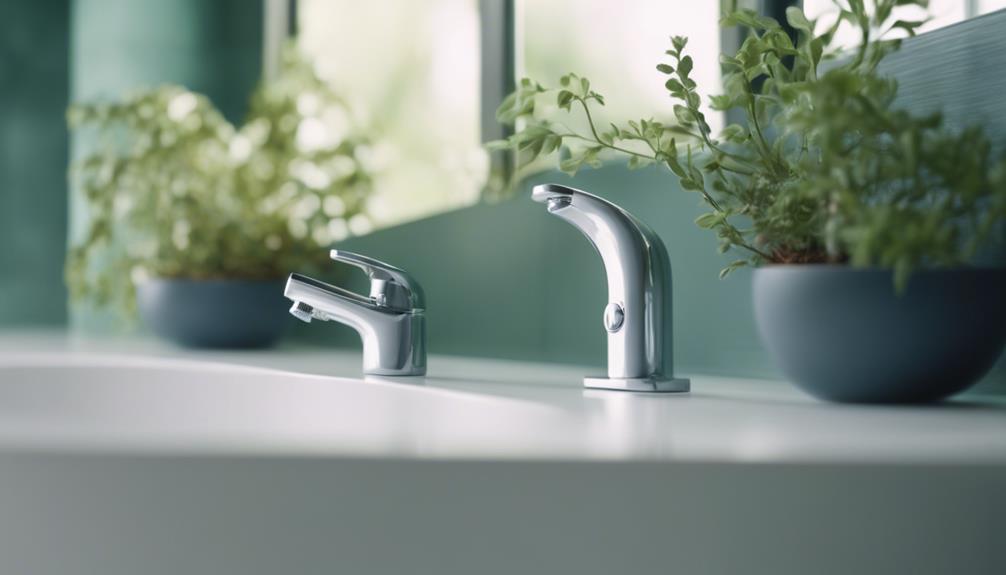
When remodeling your bathroom to save water, start by installing low-flow showerheads that use 2.0 gallons per minute or less, maintaining a strong water pressure while conserving water. Add a dual-flush toilet, which can save thousands of gallons annually by offering two flush options. Opt for WaterSense faucets, saving gallons daily with a reduced flow rate. Consider upgrading to Energy Star-certified appliances like efficient water heaters and ventilation fans that minimize energy use. Lastly, integrate a greywater system to reuse water from sinks and showers. These changes not only conserve water but could also lower your utility bills. There's always more to explore for an ecologically responsible home transformation.
Install Low-Flow Showerheads
Installing low-flow showerheads is a straightforward and effective way to reduce your water usage. These eco-friendly fixtures can significantly cut down the gallons per minute flowing from your shower, slashing your water bill and lessening your environmental impact. You might worry about sacrificing water pressure, but modern low-flow showerheads are designed to ensure you still enjoy a satisfying shower experience.
First off, you'll want to choose a showerhead with a flow rate of no more than 2.0 gallons per minute, though some models go as low as 1.5. This compares to standard showerheads that typically use around 2.5 gallons per minute or more.
The installation process is simple: you'll just need a wrench and some plumber's tape. Unscrew your old showerhead, wrap the threads of the shower arm with plumber's tape to prevent leaks, and screw on your new low-flow model. It's an easy DIY project that won't take more than a few minutes.
Choose Dual-Flush Toilets
After upgrading your showerhead to conserve water, consider replacing your traditional toilet with a dual-flush model to further enhance your bathroom's efficiency. Dual-flush toilets offer two flushing options: a low-volume flush for liquid waste and a full-volume flush for solid waste. This choice allows you to significantly reduce your household water consumption.
You might wonder how much you'll really save with this upgrade. Dual-flush toilets typically use up to 67% less water than older models, depending on the flush. Annually, this could translate to thousands of gallons of water saved, just by making a smarter choice in your bathroom.
Installing a dual-flush toilet is straightforward, and you'll find various styles and designs that match your bathroom's aesthetic.
Don't worry about the cost being prohibitive; the market offers options for every budget. Plus, many local governments provide rebates and incentives for installing water-efficient fixtures, which can help offset the initial expense.
Opt for Water-Efficient Faucets
While upgrading your toilet is a great step, don't overlook the impact of installing water-efficient faucets in your bathroom. These fixtures are pivotal in reducing your water usage without sacrificing performance. By opting for faucets with aerators or those labeled as WaterSense, you can save gallons of water each day.
WaterSense faucets, for instance, use at least 20% less water than standard models. That's not just good for the environment—it'll cut down your water bills, too.
When you're shopping, keep an eye out for faucets that offer a flow rate of 1.5 gallons per minute or less. They're just as effective for your daily needs but much kinder to the planet.
You might worry about the installation process, but it's simpler than you think. Many water-efficient faucets are designed for easy installation, meaning you won't necessarily need a plumber. And don't forget about style; these faucets come in a variety of designs to match any bathroom aesthetic.
Update to Energy-Star Appliances
Just as water-efficient faucets can significantly reduce your water usage, updating your bathroom with Energy Star-certified appliances is another smart move. These appliances include items like water heaters and ventilation fans, which are designed to use energy more efficiently while maintaining top performance. You'll not only cut down on water waste but also save a substantial amount on your energy bills.
When you choose an Energy Star-certified water heater, you're opting for a model that uses less energy to heat water and keeps it hot for longer periods. This means you're using less water as you won't need to run the tap waiting for it to warm up.
Ventilation fans that carry the Energy Star label are quieter and use about 60% less energy compared to standard models. They help prevent mold growth by efficiently removing moisture from your bathroom, which is crucial for maintaining air quality and reducing the need to frequently clean or repair moisture damage.
Implement Greywater Systems
Implementing a greywater system in your bathroom is a highly effective way to conserve water. Essentially, this system recycles water from your sink, shower, and bathtub to use for flushing toilets or watering gardens, significantly reducing your fresh water usage.
You'll need to install a diverter valve to separate greywater from black water, which comes from toilets and contains waste. Next, a filtration system is crucial to remove particles and prevent clogging. If you're handy, you might tackle this project yourself, but consulting a professional is often best to ensure everything complies with local regulations and plumbing codes.
Using greywater not only lowers your water bills but also decreases the demand on municipal water and sewage systems, making it a sustainable choice for your home. Plus, it can be a great selling point if you ever decide to move.
Don't forget, maintaining your greywater system is key. Regular checks will ensure it functions efficiently and remains odor-free.
Start planning your bathroom remodel with greywater integration today. It's a smart move that'll pay off in the long run, both for your wallet and the planet.
Frequently Asked Questions
How Can I Reuse Water From Baths for Other Purposes?
To reuse bath water, you can install a greywater system to divert it for flushing toilets or watering plants. It's eco-friendly and reduces your water bill, making it a practical choice for conservation.
Are There Tax Incentives for Water-Saving Bathroom Upgrades?
Yes, you might find tax incentives for installing efficient bathroom fixtures. Check local government or utility programs for potential rebates or credits aimed at promoting water conservation through home improvements.
What Are the Costs of Converting to a Greywater System?
You'll find that installing a greywater system typically costs between $1,000 to $4,000. Factors like your home's layout and local regulations can affect the total price, so it's best to get a tailored quote.
Can Water-Saving Fixtures Impact Home Resale Value?
Yes, installing water-saving fixtures can boost your home's resale value. Buyers often value efficiency upgrades, which can make your property more attractive and potentially increase its market price. It's a smart investment.
Is Regular Maintenance Needed for Low-Flow Toilets?
Yes, you'll need regular maintenance for low-flow toilets to ensure they work efficiently. Just like standard toilets, check for leaks and clogs, and clean them often to prevent any performance issues.
Conclusion
Congratulations! You're on your way to creating a more water-efficient bathroom. By installing low-flow showerheads, opting for dual-flush toilets, and choosing water-efficient faucets, you'll significantly reduce your water usage. Don't forget to update to Energy-Star appliances and consider implementing a greywater system to maximize efficiency. These changes not only save water but also cut down on your bills and support a sustainable planet. Embrace these upgrades and enjoy your environmentally friendly bathroom!
Related articles: Eco-Friendly Bathroom Remodel Tips for Water Conservation




Leave a Reply