

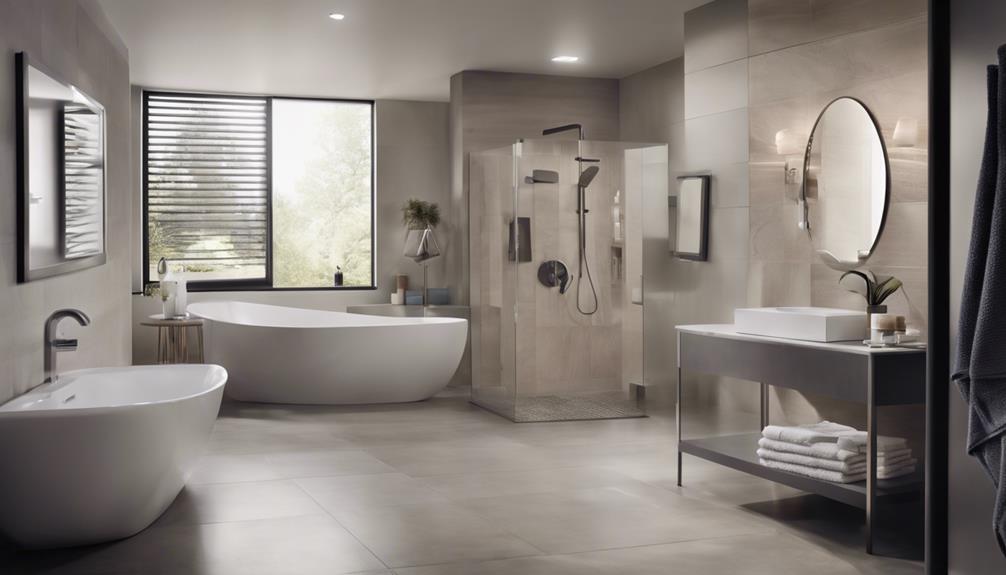
When considering an eco-friendly bathroom makeover, you should focus on installing top energy-efficient fixtures. Start with a low-flow showerhead to minimize water use while maintaining a strong spray, and a dual-flush toilet which can dramatically reduce your water bill by offering adjustable flush options. Also, opting for water-saving faucets will keep your hands clean with less waste. Don't forget energy-efficient lighting, like LEDs, which slash electricity usage, and an eco-friendly ventilation fan that keeps air fresh without draining too much power. Each of these upgrades makes a difference, and there's more for you to explore that can transform your bathroom into a model of efficiency and sustainability.
Low-Flow Showerheads
Low-flow showerheads can significantly reduce your water usage without sacrificing performance. If you're concerned about your environmental impact or just looking to cut down on your utility bills, switching to a low-flow model is a straightforward solution.
These showerheads are designed to use less water per minute than traditional models. Typically, a standard showerhead uses about 2.5 gallons per minute (gpm), but a low-flow version uses 2.0 gpm or even less.
You might worry that a lower flow means a less satisfying shower, but that's not the case. Advances in technology ensure that water pressure is maintained, so you'll hardly notice a difference—except in your water bill. Manufacturers achieve this by incorporating features like air-infusion or specialized spray patterns that maximize efficiency and feel.
Installation is a breeze, too. You can often do it yourself with basic tools and a little know-how. Just unscrew the old showerhead and screw on the new one. It's a small effort for a change that benefits both your wallet and the planet.
Dual-Flush Toilets
Switching to a dual-flush toilet is another impactful way to save water in your home. These innovative toilets offer two flushing options: a low-volume flush for liquid waste and a standard flush for solid waste. By allowing you to choose the appropriate amount of water per flush, you're not just conserving water, you're also reducing your water bill.
Dual-flush toilets are designed to use significantly less water than traditional toilets. On average, they use about 1.28 gallons per flush for solids and as little as 0.8 gallons for liquids. This can lead to substantial savings, especially when you consider that toilets account for nearly 30% of an average home's indoor water consumption.
Installing a dual-flush toilet is straightforward and can often be done without professional help. You'll find a variety of styles and designs that can match any bathroom aesthetic. Moreover, many models come with additional features like soft-close lids and anti-bacterial surfaces, enhancing both comfort and hygiene.
Water-Saving Faucets
Many modern bathrooms now feature water-saving faucets, which significantly reduce water usage without sacrificing performance. These faucets are designed to limit the flow of water, ensuring you use less every time you turn on the tap. They're not only good for the planet but also kind to your wallet, as they can significantly decrease your water bill.
When you're looking to install a water-saving faucet, you'll find options like aerators and automatic sensors. Aerators are great because they mix air with water, giving the feel of a full flow while actually using much less water. Automatic faucets, which you often see in public restrooms, ensure water isn't left running unnecessarily. They might seem a bit high-tech for a home, but they're becoming increasingly popular for their efficiency and hygiene benefits.
Choosing the right model can be a breeze. Look for faucets with the WaterSense label, which meets the EPA's criteria for water efficiency and performance. Installing these faucets can be a simple DIY project or a quick job for a plumber. It's a straightforward change that makes a lasting impact on both the environment and your water expenditure. So, why not make the switch today?
Energy-Efficient Lighting Options
After upgrading to water-saving faucets, consider enhancing your bathroom's energy efficiency with the right lighting options. You'll not only save on your electricity bill but also contribute to a more sustainable environment.
Start by replacing old incandescent bulbs with LED lights. LEDs are remarkably energy-efficient, consuming up to 90% less power than traditional bulbs. They also last longer, which means you won't be replacing them as often.
Consider adding motion sensors or timers to your bathroom lighting setup. These devices ensure lights are only on when needed, preventing unnecessary energy use. It's a simple change that can lead to significant savings over time.
You might also explore smart lighting solutions. These allow you to control the lights remotely via a smartphone app. Adjusting brightness according to the time of day or outside light levels maximizes energy efficiency without sacrificing comfort. Plus, many smart lights come with customizable color options, letting you set the perfect ambiance for relaxing in the bath or getting ready in the morning.
Eco-Friendly Ventilation Fans
Continuing with your bathroom's eco-friendly upgrades, consider installing energy-efficient ventilation fans. These fans play a crucial role in reducing moisture and odors, but they don't have to hike up your energy bills. Modern eco-friendly models use significantly less power than traditional fans, saving you money and conserving energy.
When shopping, look for fans with an Energy Star rating. These units operate more efficiently, using about 60% less energy compared to non-certified models. You'll not only notice a difference in your energy consumption but also in the reduced noise levels.
Many energy-efficient fans include features like motion sensors or humidity sensors, which trigger the fan to turn on only when necessary, ensuring that it's not running continuously.
Installing these fans can be a straightforward DIY project if you're handy, or you might want to hire a professional to ensure it's done right. Remember, proper ventilation is key to preventing mold growth and maintaining air quality, so it's worth investing in a good system.
Frequently Asked Questions
How Often Should Bathroom Fixtures Be Replaced for Efficiency?
You should replace bathroom fixtures every 10 years to maintain efficiency. Upgrading sooner can be beneficial if you notice significant wear or advancements in technology that offer better energy savings.
Are Energy-Efficient Fixtures Costlier Than Regular Fixtures?
You'll find that energy-efficient fixtures often cost more initially than regular ones. However, they save you money in the long run by reducing water and energy bills, making them a smart investment.
Do Energy-Efficient Fixtures Require Professional Installation?
You don't always need a professional to install energy-efficient fixtures, but it's recommended for optimal performance and safety. Check the complexity and warranty terms before deciding if you should DIY or hire an expert.
Can Old Bathroom Fixtures Be Recycled?
Yes, you can recycle old bathroom fixtures. Many materials, like porcelain, metal, and glass, are recyclable. Check with local recycling centers or consider donating them to reuse organizations to reduce waste.
What Rebates Are Available for Installing Eco-Friendly Fixtures?
You'll find that various rebates are available for eco-friendly fixture installations. Check your local utility company and government incentives for specific savings on items like low-flow toilets and energy-efficient showerheads.
Conclusion
Now that you're equipped with the top energy-efficient bathroom fixtures, it's your turn to make a change. Install low-flow showerheads, dual-flush toilets, and water-saving faucets to significantly cut down on your water usage. Opt for energy-efficient lighting to reduce power consumption. Don't forget eco-friendly ventilation fans for better air quality. By upgrading to these smart choices, you'll not only save on utility bills but also contribute to a healthier planet. Start making these changes today and enjoy the benefits!
Related articles: 5 Best Water-Saving Bathroom Remodel Tips




Leave a Reply