


When you're remodeling your bathroom, opt for sustainable materials like bamboo flooring or recycled glass tiles, which not only look great but also help preserve natural resources. Install water-saving fixtures such as low-flow toilets and showerheads to drastically cut down on your water usage. Switch to energy-efficient LED lighting and add motion sensors to further reduce your energy consumption. Choose low-VOC paints to improve your indoor air quality while keeping your environment safer. Don't forget to recycle construction waste to minimize environmental impact. These smart choices can significantly transform your bathroom, and there's much more you can do to enhance sustainability.
Choose Sustainable Materials
When remodeling your bathroom, choosing sustainable materials can significantly reduce your environmental impact. You're not just updating your space; you're also making a positive contribution to the planet.
Start by considering recycled glass tiles for your walls or floors. They're beautiful, durable, and they keep waste glass out of landfills.
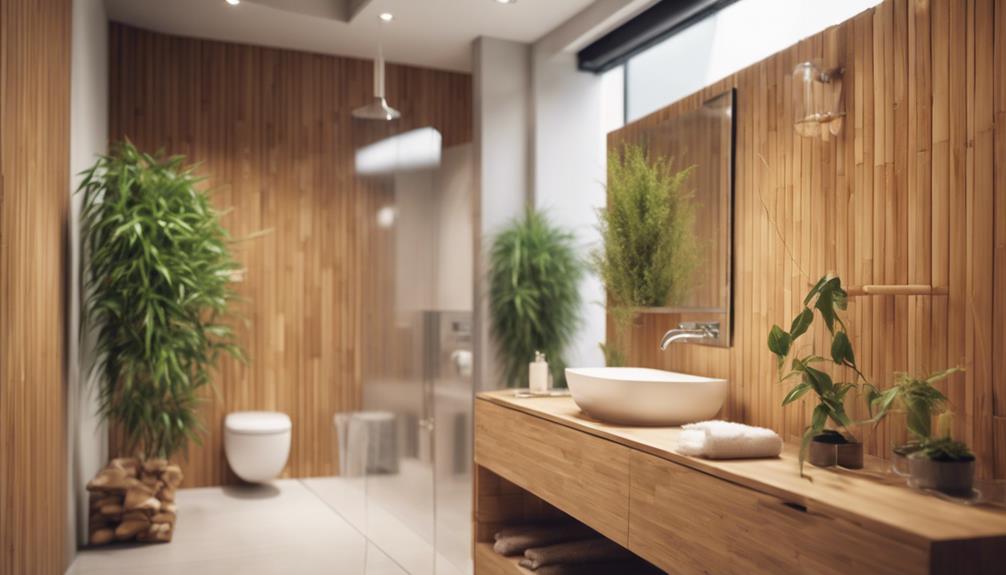
Bamboo is another excellent choice. It's a fast-growing, renewable resource that can provide a warm, natural look for your flooring or cabinetry. Unlike traditional hardwoods, which can take decades to mature, bamboo reaches harvesting maturity in just a few years, making it a more sustainable option.
For countertops, think about using reclaimed wood or recycled composite materials. These options aren't only environmentally friendly but also add a unique, rustic charm to your bathroom. Plus, they're often more cost-effective than traditional materials.
Don't forget to choose low-VOC or VOC-free paints and finishes. These products minimize the release of volatile organic compounds into your home, improving indoor air quality and reducing harmful emissions.
Implement Water-Saving Fixtures
Implementing water-saving fixtures is a critical step toward making your bathroom more eco-friendly. You can significantly reduce your water usage and lower your utility bills by selecting the right products.
Start with installing a low-flow toilet. These models use significantly less water per flush compared to traditional toilets. You'll find that dual-flush options offer even greater efficiency, allowing you to choose between a lower or higher volume flush depending on the need.
Next, consider updating your showerhead and faucets to low-flow versions. A high-quality low-flow showerhead can feel just as satisfying as traditional ones but uses much less water. This change not only conserves water but also reduces the energy required to heat it.
Don't overlook faucet aerators—they're small but mighty in saving water. By adding these to your bathroom faucets, you'll maintain water pressure while using less water.
These updates are straightforward to implement and don't require a complete overhaul of your bathroom. You're not just saving money; you're also playing a part in conserving valuable resources and protecting the environment. Remember, every drop counts, and with these water-saving fixtures, you'll make a significant impact.
Opt for Energy-Efficient Lighting
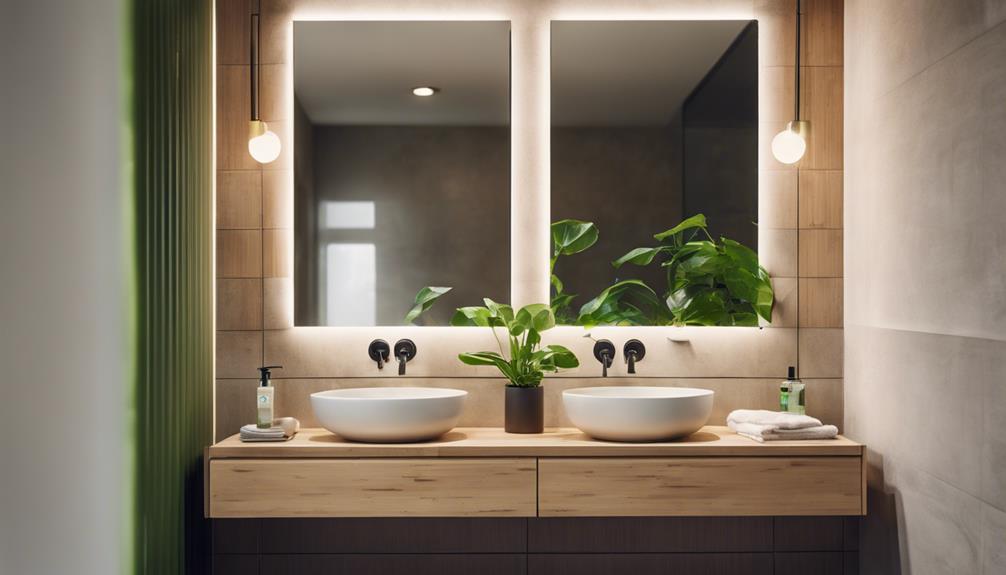
Switching to energy-efficient lighting is another essential step in your eco-friendly bathroom remodel. By replacing old, inefficient bulbs with LED or CFL options, you'll significantly reduce the amount of energy your bathroom uses. These lights not only last longer but also use at least 75% less energy than traditional incandescent bulbs.
When choosing lighting, consider the color temperature. Warmer yellow or soft white bulbs provide a cozy, calm atmosphere, ideal for a bathroom setting where relaxation is key.
On the other hand, brighter whites can mimic natural daylight, making it easier to apply makeup or shave.
Don't forget about how you control your lights. Installing dimmer switches allows you to adjust the brightness according to your needs, further conserving energy.
Also, think about adding motion sensors. These ensure lights aren't left on unnecessarily, especially helpful in households with kids who might forget to turn lights off.
Use Low-VOC Paints
Choosing low-VOC paints for your bathroom remodel is crucial for maintaining indoor air quality. VOCs, or volatile organic compounds, are emitted as gases from certain solids or liquids, including many traditional paints. These emissions can cause health issues like headaches, dizziness, and respiratory problems. By opting for low-VOC paints, you're not just sprucing up your space; you're also protecting your health and the environment.
Low-VOC paints have a reduced amount of harmful chemicals. This means they're less odorous and safer for your family and pets. They're especially beneficial in spaces with poor ventilation, like bathrooms. You'll notice fewer harsh smells during your painting project, making the remodeling process more pleasant.
Moreover, using these paints can contribute to a more sustainable home. Low-VOC products help reduce air pollution and ozone depletion. By choosing them, you're taking a step towards a greener planet.
Don't forget to check the labels when selecting your paints. Look for certifications that guarantee the product's VOC content is within a safe range. You're not just picking a color; you're choosing a healthier environment for your home.
Recycle Construction Waste
During your bathroom remodel, consider recycling construction waste to minimize environmental impact. Many materials you're tossing out can find a new life, reducing the need for new resources and decreasing landfill waste.
First, identify which materials are recyclable. Common items include concrete, tiles, metals, and untreated wood. Check with your local recycling center to see what they accept and whether they offer pick-up services. You might be surprised at the range of materials they'll take.
Next, sort your waste. Set up different bins on-site for metals, wood, and other recyclables. This makes it easier to manage materials and ensures you don't accidentally send something to the landfill that could be reused or recycled.
Consider hiring a waste management company that specializes in construction debris. They'll handle the sorting and recycling, ensuring maximum material recovery. This not only helps the planet but can also be cost-effective, as some facilities buy back recyclable materials.
Lastly, think about the future. Choose materials that are easily recyclable for any subsequent remodels. This foresight can make your next renovation smoother and even more sustainable. By recycling construction waste, you're taking a significant step towards a greener remodeling project.
Frequently Asked Questions
Can Eco-Friendly Remodels Increase Home Resale Value?
Yes, eco-friendly remodels can increase your home's resale value. Buyers often value sustainability, leading to a higher willingness to pay for energy-efficient features and environmentally friendly materials in a well-upgraded home.
How Long Does a Green Bathroom Remodel Typically Take?
A green bathroom remodel typically takes about 4 to 8 weeks, depending on the project's complexity and the availability of sustainable materials. You'll need extra time if you're incorporating specialized eco-friendly features.
Are There Eco-Friendly Options for Bathroom Insulation?
Yes, you've got eco-friendly options for bathroom insulation, like sheep's wool, cotton batts, and recycled denim. They're effective, sustainable, and avoid harmful chemicals, ensuring you're not compromising on insulation quality or environmental values.
What Are Common Challenges in Eco-Friendly Bathroom Remodeling?
You'll find sourcing sustainable materials and skilled labor tough. Cost can be higher, and balancing eco-friendliness with modern aesthetics might challenge you. Also, local building codes may not support all green options.
How Do I Maintain an Eco-Friendly Bathroom Post-Remodel?
To maintain your eco-friendly bathroom, you'll need to use sustainable cleaning products, conserve water, and ensure that all materials are recycled properly. Regular maintenance on water-saving fixtures also helps keep everything running efficiently.
Conclusion
You've got the blueprint to transform your bathroom into an eco-friendly sanctuary. By choosing sustainable materials, installing water-saving fixtures, and opting for energy-efficient lighting, you're taking significant strides toward conservation. Don't forget, using low-VOC paints protects your indoor air quality, and recycling construction waste minimizes environmental impact. Embrace these changes, and you'll not only refresh your space but also contribute positively to our planet. Ready to make a difference? Start your green remodel today!
Related articles: Green Bathroom Remodeling: Essential Eco-Friendly Tips · Flush With Green: Eco-Chic Bathroom Makeovers · 7 Best Low-Impact Techniques for Bathroom Remodeling




Leave a Reply