

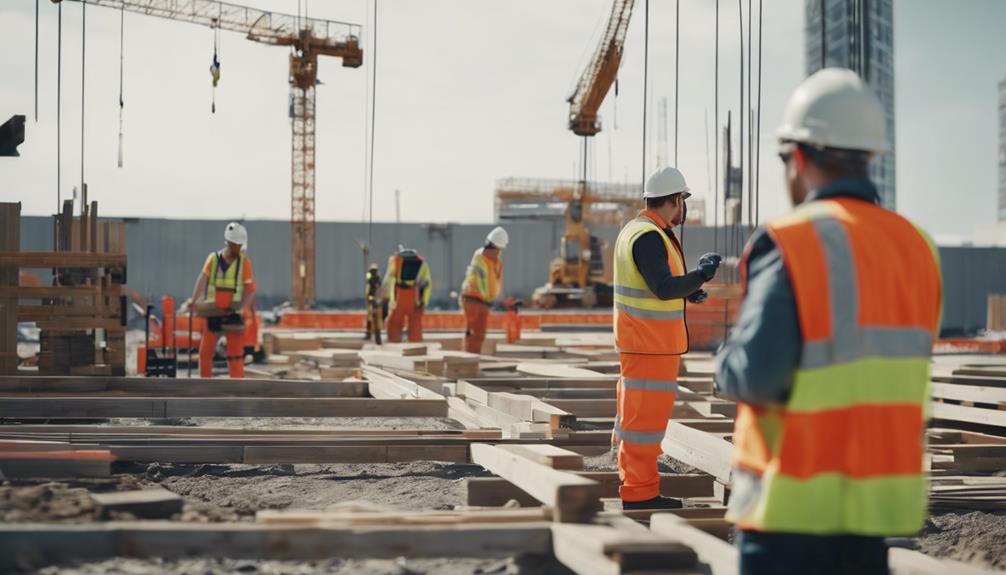
As you manage your construction site, it's crucial to prioritize safety by adhering to key OSHA standards. Firstly, implement fall protection for any work over six feet, including personal arrest systems or guardrails, and ensure all staff are well-trained on their use. Secondly, maintain a robust hazard communication program to educate your team on handling and storing hazardous materials safely, complemented by regular understanding of Safety Data Sheets. Lastly, address electrical safety by de-energizing circuits before work and using ground-fault circuit interrupters. Staying updated on these regulations not only enhances safety but ensures compliance, setting the stage for further insights into protective strategies.
Fall Protection Requirements
Fall protection is crucial at your construction site to prevent injuries from falls. As a construction manager, you're responsible for implementing and maintaining a fall protection plan that complies with the Occupational Safety and Health Administration's (OSHA) standards. It's not just about setting up safety nets or guardrails; it's about understanding the specific needs of each site.
First, you've got to assess the site for fall hazards. Any time work is done at heights of six feet or more, fall protection must be in place. Whether it's roof work, scaffold construction, or any elevated tasks, you need to ensure that the right systems are used. Depending on the job, you might need personal fall arrest systems, safety nets, or guardrail systems.
Training is another critical component. You must ensure every worker is trained on the proper use of fall protection equipment and understands the potential hazards. This isn't a one-time training either; regular refreshers are necessary to maintain safety standards.
Inspecting and maintaining equipment is also key. Before any work begins, check harnesses, lanyards, and other gear for wear and tear to ensure they're in good condition and replace anything that's compromised. Safety isn't just about compliance; it's about protecting lives.
Hazard Communication Protocols
Ensure you establish clear hazard communication protocols on your construction site to keep everyone informed about potential risks. It's crucial that you develop a comprehensive plan that includes the identification, labeling, and accessibility of Safety Data Sheets (SDS) for every hazardous chemical on site.
Remember, each worker must know how to read and understand these sheets, as they contain vital information on handling emergencies related to hazardous substances.
You'll also need to train your team on the specifics of hazard communication standards. This training should cover the types of hazards present, protective measures, and the proper procedures for reporting accidents. Make sure this training is ongoing; refreshers are essential as new hazards can emerge.
Additionally, all hazardous materials should be clearly labeled and stored safely. Containers must be well-maintained and their labels must remain intact and legible. Implement a system where workers can easily report damaged labels and request information if uncertainty arises.
Electrical Safety Standards
As we move from focusing on chemical hazards to addressing the risks associated with electrical equipment, it's important to understand and implement OSHA's Electrical Safety Standards on your construction site. You're responsible for ensuring all electrical systems are up to par, preventing potential hazards that could lead to serious injuries or fatalities.
Firstly, always de-energize electrical systems before starting any work. This prevents accidental electrocution or fires. Verify that the power is off using appropriate testing devices. Never assume the lines are dead without checking.
Secondly, maintain a safe distance from live electrical parts. OSHA mandates specific clearance distances, typically a minimum of 3 feet, to ensure safety from arcing, sparks, or direct contact. You'll need to enforce this rule strictly among your team.
Additionally, use ground-fault circuit interrupters (GFCIs) on all construction sites. These devices cut off electrical power when they detect ground faults, significantly reducing the risk of shock or electrocution.
Lastly, ensure all equipment and cords are regularly inspected for wear and tear. Frayed cords, cracked tools, and damaged insulation can be catastrophic. Replace or repair any compromised electrical tools or equipment immediately to maintain a safe working environment.
Adhering to these guidelines will help keep you and your team safe from electrical hazards.
Frequently Asked Questions
How Often Is Safety Training Required for Construction Workers?
You're required to undergo safety training before starting work and whenever there's a new hazard introduced. It's also necessary to have regular refresher courses to ensure you're up to date with safety protocols.
What Are the Penalties for Non-Compliance With OSHA Standards?
If you don't comply with regulations, you'll face hefty fines. Penalties can vary widely, potentially reaching up to $136,532 per violation, depending on the nature and severity of the infraction.
Are Subcontractors Also Subject to OSHA Safety Standards?
Yes, as a subcontractor, you're also subject to OSHA safety standards. You must follow the same regulations to ensure a safe work environment, just like main contractors do. Non-compliance can result in penalties.
How Does Weather Impact Construction Site Safety Regulations?
Weather affects your construction site safety, as regulations require adaptations for extreme conditions like rain or heat. You'll need to implement additional measures to ensure safety, such as using non-slip surfaces and providing hydration.
What Resources Are Available for Small Construction Firms on OSHA Compliance?
You can access resources for OSHA compliance through their official website, which offers guides, training tools, and contact information for direct support. Local workshops and community colleges may also provide relevant training programs.
Conclusion
Now that you're familiar with the key OSHA standards—fall protection, hazard communication, and electrical safety—it's crucial you apply these protocols on your construction site. Don't just meet the minimum requirements; aim to exceed them to ensure everyone's safety. Remember, understanding and implementing these standards not only keeps you compliant but also protects lives. Stay vigilant, keep informed, and let's make workplace safety a top priority together.
Related articles: Top 5 OSHA Standards for Construction Site Safety






Leave a Reply